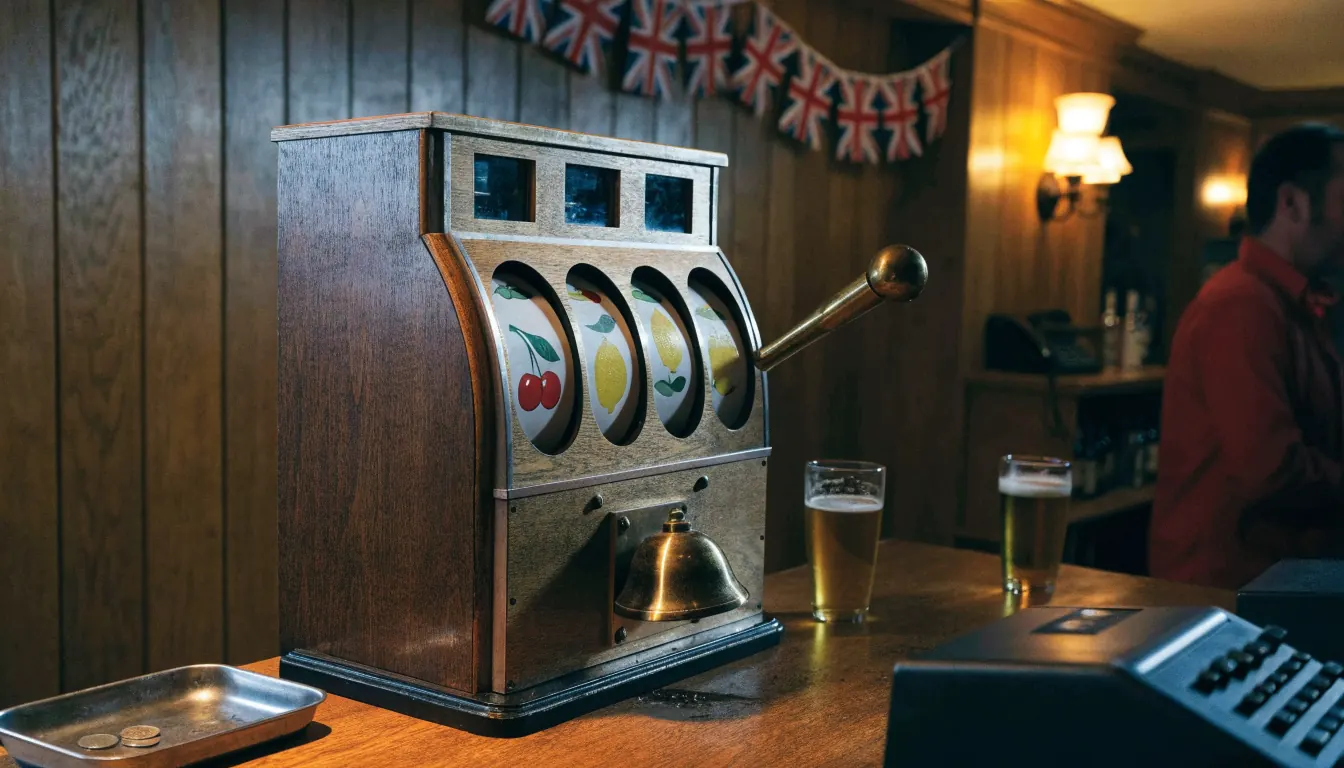
Online Casino Games for Real Cash in the UK
A stake applies to one game cycle, while the balance shown in a slot is not itself the amount at risk on each turn.
 Available in GB

Table of Contents
- Real-Money Slots: Stakes, Spins and What the Rules Mean
- Top online casinos in the UK
- When a Slot Pays: Withdrawals Are a Separate Step
- How to Check Whether a Real-Money Casino Is Licensed
- Payout Claims and the Limits of What a Slot Can Tell You
- What a Casino’s Licence Does—and Does Not—Tell You
- Paylines, Spin Costs and Real-Cash Slot Machines
- Playing Slots on Mobile: The Spin Delay Has Changed
- Slot Bonuses: Expiry Dates, Game Contributions and Cash-Out Limits
- Depositing Real Money: Check the Payment Route First
- Why No Slot Can Be Promised to Pay You
Real-Money Slots: Stakes, Spins and What the Rules Mean
A slot can look simple: choose a stake, start a spin and watch the symbols stop. Playing with cash adds a practical question to that sequence: how much can be put at risk in a single turn? Understanding the terms used on the game screen helps you distinguish the amount committed to a spin from the balance shown elsewhere in the game.
A stake is the amount you choose to risk for a turn. A spin is the action that starts the slot’s reels or their digital equivalent. In the rules, a spin may also be described as a game cycle: the sequence of play associated with one stake, from starting the game to its outcome. These terms help explain what the stake limit applies to. It is not a limit on how much you can have in a game balance; it concerns the amount staked for an individual slot cycle.
For online slots in Great Britain, the permitted maximum depends on your age. If you are aged twenty-five or over, the cap is five pounds per game cycle. If you are aged eighteen to twenty-four, it is two pounds per cycle. Those are maximums, not recommended amounts or a target to reach. You can choose to stake less, and a game’s controls may let you select from the available lower settings.
The relevant figure is the total stake for that turn, not simply a number beside one button. A screen may show several controls or choices that affect the stake. Before starting a spin, check the amount the game identifies as the total being committed. If you change a setting, look again: the amount may have changed too. A clear pause before pressing the spin control is more useful than trying to work out the cost after the reels have moved.
Casino Games: Slots, Live Tables and Online Play
Cash play and practice play
A slot offered in a practice mode is not the same as real-money play. Practice mode lets you interact with a game without staking cash; a real-money session uses funds from your gambling account for the selected stake. The appearance and controls may be similar, so check which mode is active before you start. A familiar game screen does not, by itself, tell you whether a turn is using cash.
In real-money play, the stake is the amount exposed to the outcome of that cycle. It is separate from any amount displayed as a running balance, and changing the stake changes how much you put at risk on the next turn. A larger stake is not a way of making the game predictable. It simply means more money is committed to that particular cycle, within the applicable cap.
The amount shown may also be described as a bet or a total bet. Labels vary between games, but the useful question is the same: what will be taken from your available funds when this cycle begins? Read the on-screen value rather than relying on what you remember selecting earlier. If the game has settings that are unfamiliar, take time to understand them before staking cash.
Set a boundary before playing
A legal maximum does not determine what is affordable for you. Consider setting a deposit limit before adding funds, and decide in advance how much you are prepared to spend. A deposit limit concerns money added to your gambling account; it is not the same as the slot stake cap, which applies to an individual game cycle. Keeping those two ideas separate makes it easier to see both the cost of a single turn and the broader amount you have chosen to make available.
It can also help to keep the display in view while playing. Check the stake before each cycle, especially after changing a setting or returning to a game. If the amount is unclear, do not start the turn until you understand what it represents. The fact that a stake falls below the legal maximum does not make it suitable for every budget.
- Identify the game mode
- Confirm the stake for the next cycle
- Check which age-based maximum applies
- Rely on memory for the stake
- Ignore a screen that is unfamiliar
- Assume a stake is suitable just because it is below the legal maximum
These boundaries give you a practical way to read a slot screen: identify the mode, confirm the stake for the next cycle and remember which age-based maximum applies. A spin is brief; checking its cost beforehand need not be.
Top online casinos in the UK
- x3betBonus: Welcome Pack 100% Up to £1.000 + 200 Free Spins · Payout speed: 1-3 business days
- SpinFormulaBonus: 550% Up To £15,000 + 550 FS · Payout speed: 1-3 business days
- NightWinBonus: £900 + 400 free spins · Payout speed: 1-3 business days
- BritsinoBonus: Welcome Package – Get your £2,200 + 2,000 FS · Payout speed: 1-3 business days
- JetsetspinsBonus: 200% Bonus + 100 Free Spins + Free Royal Wheel · Payout speed: 1-3 business days
- ChanzeBonus: Slots Welcome Bonus #1 200% up to €500 · Payout speed: 1-3 business days
When a Slot Pays: Withdrawals Are a Separate Step
A winning result can change the balance shown inside a slot without putting money into your bank account. The game balance is part of your gambling account; a withdrawal is a separate transaction that moves eligible funds out of it. If you are looking for an online casino that pays real cash, that distinction matters more than a celebratory message on screen. A win displayed in a game is not the same thing as a completed cash-out.
The usual sequence is simple in principle: a game result is added to your casino balance, you request a withdrawal through the account’s payment area, and the operator sends the payment through a supported route. The route then matters, as does the point at which the operator has actually submitted the payment. Until the money has reached your chosen account, the amount shown in the casino is still not cash in your hands.
This is why searches for slots that pay real cash can point to two different things. A slot may award a win within the game, while the casino’s payment system determines how you can request and receive a withdrawal. The game does not send money directly to your bank or payment account. Its result becomes part of the casino balance, and the cash-out process begins outside the game.
Online Casino Tournaments UK: Rules and Checks
Check the status, not just the balance
When you request a withdrawal, look for the status attached to that transaction in your account. A balance can fall after a request is made, for example, without the payment having arrived at its destination. A status indicating that a request is being handled is not proof that the bank or payment service has credited the funds. The relevant question is whether the withdrawal has been completed and whether the receiving account shows the payment.
If a payment appears to be taking longer than expected, check the casino account and the payment account separately. The operator’s record can show what stage it says the transaction has reached; the receiving provider’s record can show whether funds have arrived. If those records do not line up, contact the operator through its stated support route and refer to the withdrawal shown in your account. Keep the details of the request so you can describe the issue clearly.
A casino app that pays real cash follows the same basic distinction as a website: the app can display a balance and provide access to a withdrawal request, but that display is not itself a bank transfer. The appearance of an app does not tell you how quickly a payment will be processed. If you play on a phone, it is still worth checking the transaction status and the payment details rather than assuming that a completed-looking screen means the money has arrived.
Requesting Withdrawals
Check the balance Verify that the win has been added to your casino balance.
Request the transfer Submit a withdrawal request through the account’s payment area.
Monitor the status Check the transaction status in your account and verify the funds in your receiving provider’s record.
The payment route can affect speed
The method you select for a withdrawal can make a difference to how quickly money arrives. A specialist review identifies PayPal, open banking services and debit cards connected to fast payout systems as among the quicker routes. That is a comparison of payment methods, not a promise that every transaction using them will be immediate. The casino must support the method, and the payment still has to pass through the relevant stages before it reaches you.
Check which withdrawal methods the casino actually offers before relying on a particular route. A payment option shown when you deposit does not necessarily establish that it can also be used to withdraw. Read the withdrawal options and any instructions attached to them, then select a route you can access and use. This is especially relevant if you have more than one payment account: sending funds to a different destination from the one you expected can create avoidable confusion.
The word “fast” can also refer to different parts of the process. An operator may handle a request promptly, while the payment provider takes additional time to make the funds available. Conversely, a payment route described as quick does not tell you when the casino will review or send a particular request. Without a confirmed completion and receipt, a stated processing stage should not be treated as money received.
Online American Roulette UK: Rules and Gameplay
What to verify before cashing out
Before submitting a withdrawal, confirm the amount and destination shown on the request screen. Check that you have selected the intended payment method and that the details displayed are correct. Then save or note the transaction reference and follow its status in your account. These checks do not speed up a payment, but they make it easier to identify whether an issue concerns the casino’s handling or the receiving service.
If you are comparing online slot games that pay real cash, keep the game and the withdrawal route separate in your assessment. A game’s balance display says what the casino account currently shows; the payment information explains how a cash-out can be requested and where it may be sent. Neither an app label nor a win notification answers the practical question of when the funds will appear in your payment account. Only the completed transaction and the receiving account can do that.
How to Check Whether a Real-Money Casino Is Licensed
For customers in England, Scotland and Wales, a real-money casino must be licensed by the UK Gambling Commission (UKGC) to offer gambling remotely. The operator’s location does not change that requirement: a business serving customers in Great Britain needs the relevant Commission licence even if its equipment or offices are elsewhere.
That makes the licence a useful first check when considering real-cash online casinos. It is not enough for a site to say that it is licensed, display a regulator’s logo or describe itself as regulated. You need to be able to connect the casino’s trading name to an operator that appears on the UKGC’s register with the appropriate licence.
Licensing Requirement
For customers in England, Scotland and Wales, a real-money casino must be licensed by the UK Gambling Commission (UKGC) to offer gambling remotely.
Match the casino to its operator
A casino brand and the company that runs it may have different names. Look in the site’s terms or other company information for the operator’s legal name, then search for that name in the Commission’s public register. Check that the listing relates to remote casino gambling, rather than assuming that any entry for a similarly named company covers the service you are considering.
Where the register provides relevant details, compare them with the casino’s own information. A mismatch between the operator named on the site and the business in the register needs explanation; a familiar brand name alone does not resolve it. If you cannot establish which company is responsible for the casino, you cannot reliably confirm its licensing position from the brand name alone.
The same approach applies when looking at online casinos that pay real cash or at real-cash slots online: the licence check is about the operator offering the gambling, not a claim made about an individual game. A slot’s appearance on a casino site does not, by itself, tell you whether that site is licensed.
Check the territory
The UKGC requirement described here applies to operators serving Great Britain: England, Scotland and Wales. A remote operator cannot avoid it simply by being based abroad. For those customers, the relevant question is whether the operator holds the required UKGC licence.
Northern Ireland has a separate regulatory framework. The Great Britain licensing position should not be treated as a complete description of the rules there, and a UKGC entry does not, by itself, establish how Northern Ireland’s separate framework applies. If you are in Northern Ireland, check the rules that apply in that jurisdiction rather than assuming the Great Britain test answers the question.
Live Dream Catcher Casino in the UK: What to Check
This distinction matters when a site uses broad wording such as “UK casino”. A label may not explain which territory’s rules the operator relies on or which company is responsible for the service. Read the operator details and consider where you are playing; do not treat a general UK-facing claim as proof of a particular licence.
Treat the register as a specific check
A register entry is useful only when it matches the operator and activity in question. Confirm the legal entity, look for the relevant remote casino permission, and make sure the casino’s own terms identify the same operator. If those details do not line up, pause rather than filling the gap with an assumption.
Licensing is a check of regulatory status, not a promise about a casino’s games or outcomes. For real-cash casino slots, the important first step is to establish whether the business offering them is authorised for the relevant market. In Great Britain, that means the UKGC licence; Northern Ireland requires a separate territorial check.
Payout Claims and the Limits of What a Slot Can Tell You
A slot’s past results cannot tell you whether it will pay on your next spin. A run of losses does not make a win due, and a recent win does not mean another is less likely. Each outcome is independent of the sequence before it. That is the important limit when you see claims about real-cash-paying slots: a record of earlier results is not evidence that a particular game will pay you.
No Guaranteed Wins
Past results cannot predict future outcomes; a run of losses does not make a win due and no system based on previous spins can change the next result.
The same applies to claims about “winning” slots or a real-cash payout casino. A game may produce wins for some players without offering a reliable way for you to predict or secure one. The words “pays” and “winning” describe outcomes that have occurred; they do not promise what will happen in your session. No system based on watching previous spins can change the next result.
There is a separate, concrete limit on what you can stake. A specialist review of online slots describes the per-spin ceilings as £5 for players aged 25 and over, and £2 for those aged 18 to 24. These are maximums, not recommended stakes or targets. A game may allow a lower stake, and setting a personal deposit limit can help keep spending within an amount you have decided you can afford before playing.
A larger permitted stake does not make a slot more likely to land a winning combination. It changes the amount at risk on that spin. Likewise, choosing a game because someone calls it a real-cash-winning slot does not turn that description into a forecast. The outcome is not made predictable by the game’s name, a streak on screen or another player’s account of a win.
Online Bingo UK: Rooms, Slots and Costs
This is worth keeping in mind when you encounter offers described as no-deposit real-cash slots. The phrase may attract attention, but it does not establish that a player will receive withdrawable money or that a game will produce a payout. The terms of an offer and the result of a spin are different matters; the label alone cannot tell you what you will receive.
If you are trying to work out how to win real cash playing slots online, there is no past-spin pattern that supplies a dependable answer. You can decide what you are willing to stake and stop when you reach your limit, but you cannot use previous outcomes to improve the chance of the next one. That remains true whether you play in a browser or through a casino app.
Treat a payout claim as a description to examine, not a prediction to rely on. The stake ceilings set an upper boundary on each spin; they do not say that a win is likely, due or assured. A slot can show you what happened. It cannot tell you what will happen next.
What a Casino’s Licence Does—and Does Not—Tell You
A licence is a statement about who may offer gambling under a particular regulatory system. In Great Britain, the UK Gambling Commission oversees commercial gambling, including online casino services. It is the sole regulator for commercial gambling there. That remit matters whether you access a real-money casino on a computer or a phone: the format of the screen does not change which regulator governs the service.
The UKGC’s Reach
Remote gambling offered to consumers in Great Britain falls within the Commission’s remit even when the key equipment is located elsewhere; a company cannot avoid this requirement by running systems from another country.
The Commission’s reach is not determined by where a casino’s technical equipment is based. Remote gambling offered to consumers in Great Britain falls within its remit even when the key equipment is located elsewhere. For you, the important point is that a company cannot avoid the relevant British licensing requirement simply by running its systems from another country.
The Commission issues operating licences to businesses and personal licences to individuals who work in specified roles in the gambling industry. These are different forms of permission. An operating licence concerns the business providing gambling; a personal licence concerns an individual’s role. A casino’s licence is therefore not a general certificate held by every person connected with the service, nor does an employee’s personal licence replace the business’s operating licence.
This distinction helps put a licence claim in context. When a real-cash casino online says it is licensed, the claim concerns the operator’s authority to provide gambling under the applicable rules. It is not a statement that every part of the experience is suitable for every player, or that a particular game will produce a win. Nor does the word “licensed” by itself tell you the terms attached to a promotion or how a withdrawal will be handled. Those are separate questions.
“UK” can also obscure a regulatory boundary. The Gambling Commission’s role described here applies to Great Britain: England, Scotland and Wales. Northern Ireland has a separate regulatory framework, so the Great Britain licensing position should not be treated as covering it in the same way. A statement about a UK-licensed real-money casino needs to be understood against that distinction, rather than as a promise that one regulator governs every part of the United Kingdom identically.
Mines Casino Game UK: Rules, Demos and Risks
For a reader considering a real cash casino, the licence is best understood as the starting point for judging regulatory responsibility, not as an endorsement of the operator or a prediction about your results. It identifies the system of oversight that applies to the business and the regulator responsible for commercial gambling in Great Britain. That is meaningful information, but it answers a narrower question than whether a casino is right for you.
Paylines, Spin Costs and Real-Cash Slot Machines
A payline is a pattern across the symbols shown on a slot’s reels. A winning combination has to match the game’s rules along an eligible line; symbols that appear in a promising pattern elsewhere may not count. Some games display lines that run straight across, while others use less obvious paths. The paytable or help screen explains which patterns are active and what the game treats as a match.
The number of active paylines is a choice with a direct trade-off. Activating more lines gives more possible routes for a winning combination to land, but it also raises the cost of each spin. That matters in real-money play because a spin’s price is not always the same as the amount shown as the stake for one line. Check whether the displayed total applies to all active lines before pressing spin.
Attention: Activating more paylines increases the possible routes for a win but also raises the total cost of each spin.
For instance, a game may show a per-line stake separately from the total stake. If you increase the number of lines while leaving that per-line amount unchanged, the total cost rises. The precise controls differ between games, so look for the full spin cost on the screen rather than assuming that a small-looking line stake is the amount that will be deducted.
Some slots let you choose how many paylines to activate; others set the lines in advance or bundle them into a selection. If the game offers a choice, compare the total cost for each setting before playing. A larger number of active lines is not automatically the sensible setting: it raises the chance of a winning combination, but you pay more for every spin. A smaller setting costs less per spin, while leaving fewer lines available to form a winning pattern.
This is a question of coverage and cost, not a way to make a session predictable. More active lines do not mean that a particular spin will produce a win, nor do they make the cost increase disappear. The decision is useful to make before play starts, when the controls and total are visible, rather than after changing settings without noticing what the change does.
On a phone, the game’s compact layout can make the distinction between line stake and total spin cost easy to miss. Open the game information if the payline arrangement or controls are unclear, and confirm the amount shown for the complete spin. If the total is not clear, do not guess. You can choose a different setting or game instead.
Online European Roulette in the UK: Rules and Odds
The practical check is simple: identify which lines are active, see how the game defines a winning pattern, and read the full cost of a spin. That lets you decide whether the added coverage is worth the added expense to you. It does not turn a slot into a guaranteed way to win real cash.
Playing Slots on Mobile: The Spin Delay Has Changed
A specialist review reports that the enforced 2.5-second pause between online slot spins has been removed. On a phone, that can make it possible to start another spin sooner after the previous one ends. It changes the pace available to you; it does not make a game more predictable or improve its chance of paying.
The practical effect is easy to underestimate. A short pause can feel insignificant once, but repeated taps may compress a session into less time than you intended. On a small screen, it can also be easier to keep playing without noticing how quickly you are moving through a session. The absence of a forced delay makes your own stopping point more important, not less.
This does not mean every spin will start immediately. A game still has to complete its animation, and a mobile connection or device may affect how quickly it responds. Nor does removing the pause mean that online slots in Britain can run unattended: autoplay is banned. You remain responsible for starting each spin yourself.
Before opening a mobile casino, consider setting a deposit limit before your first deposit. A limit gives you a boundary to work within; it does not slow the spins or guarantee that you will stop at a particular point. If you find yourself tapping faster than you meant to, close the game and take a break rather than relying on a game feature to interrupt you.
Mobile Play Setup
- Set a deposit limit before the first deposit
- Confirm the stake for the current round
- Verify active game settings
- Decide on a stopping point before beginning
Mobile screens also make it worth checking the stake and any active game settings before you press spin. A tap can start a paid round, so take a moment to confirm what you are doing, especially if you have switched games or returned to a session after leaving it open. The convenience of playing in an app or browser is not the same as having more control over the pace.
For real-cash mobile slots, the useful distinction is between a faster opportunity to play and a better outcome. The change concerns the interval between spins, not the result of any spin. A quicker rhythm may make it easier to play more rounds in a given stretch of time, but it cannot tell you when to stop or what the next result will be. Decide on a stopping point before you begin, and do not treat the missing pause as a signal to keep going.
Slot Bonuses: Expiry Dates, Game Contributions and Cash-Out Limits
A bonus can look like cash in your account without being available to withdraw. Its terms may set a deadline, specify which games count towards wagering requirements, or cap what you can take out. This applies to deposit offers and to a real-cash casino no-deposit bonus, where winnings from free spins may still come with conditions.
Crazy Time Live Casino Game in the UK: What to Check
A specialist review reports that bonus funds and free spins can expire after a stated period, with the offers it describes setting periods from 7 to 30 days. Check the expiry date before accepting an offer and note whether the clock starts when the bonus is claimed or when play begins. If the bonus expires, any remaining funds or unused spins may no longer be available.
The amount of play that counts can also depend on the game. A specialist review says slots are commonly counted in full towards wagering requirements, while live tables and blackjack may count at a lower rate or not at all. The operator’s terms should identify the eligible games and their contribution. A game that contributes less means more play may be needed to meet the requirement.
There is a limit on how high a wagering requirement can be: bonus wagering requirements cannot exceed 10x. For instance, a 10x requirement on a bonus means wagering an amount equal to ten times the bonus value before qualifying winnings can be withdrawn. Read the calculation carefully; the bonus amount and the qualifying games both matter.
Free spins may have a separate cash-out ceiling. A specialist review notes that some such offers limit withdrawals from spin winnings. That can mean a balance shown after a win is not the amount you can ultimately withdraw under the promotion. Check whether the cap applies to winnings from the spins, and whether any other conditions must be met first.
Bonus Terms
- Check expiry dates, which can range from 7 to 30 days
- Verify game contributions towards wagering requirements
- Ensure bonus wagering requirements do not exceed 10x
- Check for cash-out ceilings on free spin winnings
For no-deposit slots that offer real-cash winnings, “no deposit” describes how the offer begins, not whether the winnings are unrestricted. Before claiming, look for the expiry, wagering rules, game contributions and cash-out limit. If any term is unclear, ask the operator to explain it before you opt in.
Depositing Real Money: Check the Payment Route First
Before you add funds for real-money slot play, check which payment methods the cashier accepts and whether the same route can be used for a withdrawal. A method that works for a deposit does not automatically offer the quickest way to receive money later. Payment options and conditions can differ between operators, so read the terms shown before confirming a transaction.
Credit cards cannot be used for gambling deposits. That restriction also cannot be bypassed by loading an e-wallet with a credit card and using the wallet to fund play. If you use an e-wallet, check how it was funded and whether the casino accepts that route. Debit cards are distinct from credit cards, but the payment page should make clear which card types are permitted.
A specialist review identifies PayPal, open banking services and debit cards connected to fast-payout systems as options that may be quicker for withdrawals. Treat that as a point to check, not a promise about your own payment: the deposit and withdrawal processes are separate, and the cashier’s terms determine which routes are available to you.
Before your first deposit, consider setting a deposit limit. It gives you a way to decide in advance how much money you are prepared to add, rather than making that decision during play. The operator must also establish your age and identity before you can deposit or gamble. If the account asks for verification, complete it through the operator’s stated process before proceeding.
5-Reel Slots in the UK: Features and Free Play
A “no-deposit” real-cash offer, where one is advertised, is not a payment method. Read its terms separately from the cashier information; a promotion does not remove payment restrictions or tell you how a later withdrawal will be handled. Check the method, any stated conditions and whether it suits both the way you intend to fund the account and the available cash-out routes before sending money.
Why No Slot Can Be Promised to Pay You
A slot’s past results cannot tell you what your next spin will do. Previous spins have no bearing on future outcomes, and each player has an equal chance of winning. A run of losses does not make a win due, just as a recent win does not show that another is more likely to follow.
That matters when you see claims about top-rated slots that pay real cash or wonder which games will produce a win. A rating, a player’s account of a payout or a sequence of successful spins is not a promise about your results. It describes a judgement or an earlier outcome, not what will happen when you play.
The same distinction applies to free slots advertised with cash prizes. The word “free” describes how a particular mode is presented; it does not, by itself, establish that you will receive a cash prize. Check what the offer actually says and what conditions apply before treating a displayed prize as money you can claim.
Be wary of language that suggests a game is “due” to pay, or that a particular slot reliably pays a certain person. No past pattern can establish that. The outcome of your next spin is not made more favourable by how many times you have played, how long you have waited or what happened to another player.
You can choose a game for its design or features, but not on the assumption that its history predicts your return. A claim that a slot pays real cash may describe the possibility of a win; it cannot promise that you will be the one to receive it.
How can you check whether an online casino is licensed in the UK?
Check the UK Gambling Commission’s register for the operator and confirm that its relevant licence is active. Great Britain and Northern Ireland have different regulatory frameworks.
Which payment methods are generally quickest for withdrawals?
PayPal, open banking services and debit cards linked to fast payout systems are generally among the quickest.
Is LuckyPays licensed by the UK Gambling Commission?
No. The UK Gambling Commission register dated 26 September 2026 does not list LuckyPays under its brand or stated domain, including luckypays.io.
Which payment types are listed?
The listed types are PayPal, open banking services, debit cards, fiat currency and cryptocurrency.
Created by the "Casino not on Gamstop" editorial team.