3-Reel Slots in the UK: Layout, Wins and Features
Reel count describes the visible columns, while symbol positions, paylines and features depend on each game’s rules.
 Available in GB
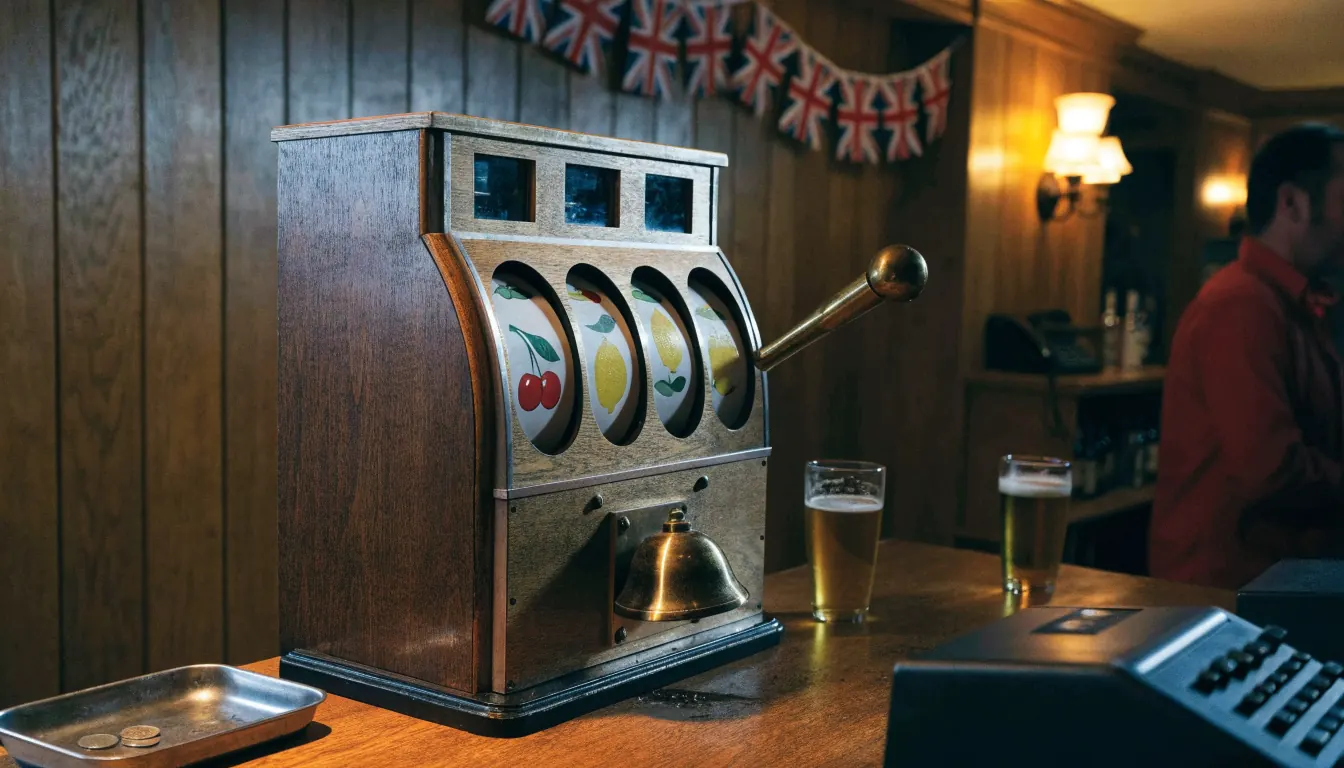
What Three Reels Tell You—and What They Don’t
A three-reel slot is named for the number of vertical reels shown in its main play area. When you start a spin, symbols move on those reels and then settle into a displayed arrangement. The label gives you a quick description of the game’s layout, but only a partial one. It does not, by itself, tell you how wins are formed, what features are included or how play will feel over time.
That distinction matters when you browse 3 reel slots online. Two games can share the same reel count and still work quite differently. One may keep its presentation spare, while another may add animations, feature symbols or extra ways for a result to qualify as a win. The number in the name is a useful starting point, not a full description of the rules.
Reel count is a layout, not a verdict
Think of reel count as one part of a slot’s visible arrangement. It tells you how many vertical columns appear, but not how many symbol positions are visible in each column. Nor does it tell you whether the game uses paylines, another win mechanism, or a combination of features. Those details belong to the game’s rules and information screen.
The distinction is easy to miss because a familiar-looking layout can suggest familiar play. A compact set of reels may evoke a traditional machine, but appearance alone cannot establish how the game evaluates a spin. The rules may define which symbol combinations count, where they need to appear, and whether special symbols affect the result. You need the game’s own description for those particulars.
A three-reel layout is also not the same thing as a limit on how many reels can be involved in a wager. A five-reel slot may allow a bet to cover all five reels. The wager’s scope is therefore a separate question from the reel count: check how the game says a bet is applied rather than assuming that a smaller-looking layout tells you everything about the stake or result.
Best High-RTP Slots in the UK: Understanding RTP
The other details to check
When you open a game, look beyond its title and artwork. The pay information or rules should explain the way the game recognises winning combinations. If paylines are used, they describe paths across the visible layout that can qualify for a win; the count and arrangement are specific to that game. Some games may present other mechanics instead, so do not infer a payline system merely from the presence of reels.
Also look for explanations of special symbols and features. A symbol may have a role beyond forming an ordinary combination, but its effect is not universal across slots. The game information should say what it does and whether any conditions apply. If a feature is described in promotional language but its operation remains unclear in the rules, the label is not a substitute for an explanation.
The same care applies to a game’s name and style. “Classic” can describe its look or the kind of experience it aims to evoke; it does not certify a particular set of rules. A three-reel game may use bright fruit imagery and familiar sound cues, or it may take a different visual approach. The surface can help you decide whether you like the presentation, but it cannot tell you the game’s underlying mechanics.
Nor does reel count reveal the game’s return characteristics. It is not a measure of how often wins occur, how large they may be, or how a session might unfold. Those questions involve other properties and the game’s own information. Treating “three reels” as shorthand for a particular level of risk or a predictable pattern would make the layout do work it was never designed to do.
What “best” can reasonably mean
If you are looking for the best three-reel slots in the UK, first decide what “best” means for you. You might value an uncluttered screen, rules that are easy to follow, or a particular visual style. Those are preferences you can assess from the game itself. They are different from claims about likely returns, which should be checked against the game’s published information rather than guessed from the number of reels.
- Check the game’s published information for return claims
- Decide what “best” means based on your own preferences
- Assess rules and visual style from the game itself
- Guess likely returns from the number of reels
- Assume a universal winner based on a specific layout
- Rely on the number of reels to determine quality or suitability
A practical comparison begins with the rules, then moves to the experience. Can you tell how a result is evaluated? Are the symbols and any special features explained clearly? Does the screen present the information you need without making you hunt for it? These checks do not identify a universal winner; they help you decide whether a particular game suits what you are looking for.
The phrase “classic 3-reel slots” can be useful when describing a style, but it can also blur the line between tradition and mechanics. A game may look like a familiar fruit machine while using rules that differ from another game with a similar appearance. Read the individual rules rather than relying on the category name to answer questions about play.
That is why “best” is not a technical property of a reel layout. There is no conclusion about quality or suitability in the fact that a game shows three columns. A title that is straightforward to understand may suit one person, while another may prefer a different presentation or set of features. Your comparison is more meaningful when it separates visible design from the rules and characteristics that govern the game.
For online 3-reel slots, the same principle applies whether you encounter a game through a casino’s catalogue or open its information panel directly. The interface may make the layout obvious at a glance, but the important details can sit elsewhere. Take a moment to find the rules before treating the reel count as a summary of how the game works.
Bonus Buy Slots UK: How the Feature Works
The simplest way to read the label is therefore also the most reliable: it tells you how many reels are displayed, and no more than that. It does not promise a classic rule set, a particular way of forming wins or a certain session pattern. Once you keep those distinctions clear, you can compare three-reel games on what their rules actually say, rather than on what their appearance seems to imply.
Classic Machines, Fruit Symbols and Paylines
A classic-style slot often borrows the look of a physical fruit machine: a compact bank of reels, familiar symbols and a simple display of possible wins. That visual language can make a game seem straightforward, but the artwork is only the surface. To understand what a particular machine pays for, you need to look at its paytable and the way its paylines are arranged.
Fruit symbols are part of the tradition, not a reliable guide to a game’s rules. Cherries, lemons, bells and other familiar images may appear, but their value depends on the individual game. A symbol that looks prominent is not necessarily the most valuable, and matching pictures do not automatically form a winning combination. The paytable explains which symbols count, how many must appear and what each qualifying pattern pays.
Fruit symbols like cherries, lemons, and bells are traditional visual cues, but their actual value depends entirely on the individual game’s paytable.
The name “fruit machine” is strongly associated with traditional British amusement and gambling machines. Online games may use the same visual cues while changing the layout, adding extra symbols or presenting the reels in a different way. So the label can describe a style, but it does not tell you everything about the underlying rules. Two games that both look like classic fruit machines may have different symbol values, paylines and win conditions.
A reel is the vertical strip on which symbols appear. A payline is a route across the visible reel positions that the game recognises when it checks for a win. On a traditional-looking layout, the most familiar route is a horizontal line through the centre. Other games may include routes that pass above or below it, or that move diagonally between reels. The illustrations in the game’s help screen or paytable show which routes are active.
This distinction matters because a row of matching symbols on screen is not necessarily a win. The symbols must form a combination along a route that the game counts. If a matching pair sits on separate parts of the display, or if the symbols do not line up on an active payline, the game may not treat them as a winning pattern. The visual impression of “nearly matching” is not the same as a result recognised by the rules.
Paylines are not the same thing as reels. Reels describe the columns of moving symbols; paylines describe the paths used to evaluate them. A machine can have a traditional fruit-machine appearance while offering more than a single straight line, and a game with a small-looking layout can still apply several different paths. The number and shape of those paths are specific to the game, so the screen layout alone is not enough to establish how a win is formed.
Live Casinos in the UK: Games, Rules and Offers
Some games let you choose how many paylines to activate, while others set the available lines for you. Where a choice is offered, the paytable should explain how it affects the stake and which lines are in play. If you overlook that setting, you may misunderstand why a pattern did or did not pay. If all lines are active by default, that does not mean every visible arrangement is a winning one: the symbols still need to meet the stated conditions.
Paytables are the practical reference point for both symbol values and line patterns. They may show a series of matching symbols along a payline, explain whether combinations must start from a particular side, and identify any special symbols. Read the rules for the specific game rather than relying on conventions remembered from another machine. Classic styling can suggest familiarity, but it is not a substitute for the game’s own instructions.
A wild symbol, when a game has one, may stand in for other symbols to help complete a combination. A scatter symbol may be counted under a separate rule rather than needing to land on a payline. Those terms describe possible features, not promises that every fruit-themed game includes them. The paytable should state whether such symbols exist and how they work. If the rules do not list a feature, the artwork is not evidence that it is present.
Matching symbols on the screen do not automatically guarantee a win; they must form a combination along an active payline recognized by the rules.
There can also be differences in how a game treats a combination that appears on more than one line. The paytable or game rules may explain whether each qualifying line is considered separately and how the displayed win is calculated. This is worth checking when the screen shows several apparent matches at once. A cluster of familiar symbols can look self-explanatory; the calculation is still governed by the game’s written rules.
The same care applies to the word “classic”. It can refer to an old-fashioned visual design, a familiar arrangement of fruit and bells, or a simplified set of features. It does not necessarily mean that the game reproduces the exact mechanics of a physical machine. Online versions can retain the appearance while using their own payline patterns and symbol rules. Treat the label as a description of style unless the game’s rules make a more specific claim.
For a quick inspection, focus on the paytable before play. Find the symbol guide, identify the active paylines and check the conditions for each listed combination. Then look for special-symbol rules and any explanation of how wins are totalled. This takes the guesswork out of reading the display. It also helps distinguish a line that merely looks promising from one that the game actually recognises.
The phrase “three-reel fruit machine” may bring to mind a compact, uncomplicated game, but reel count does not settle the question of how many ways a game can pay. The lines can be straight, angled or otherwise defined by the layout, and symbols can have rules that sit outside ordinary line wins. What matters is the combination of visible arrangement and the game’s stated evaluation rules.
Nor does a familiar fruit-machine design tell you the odds. The symbols on screen show possible outcomes, but appearance alone does not reveal how likely each outcome is or how the game’s returns are structured. The paytable tells you what qualifying combinations pay; it is not, by itself, a complete account of the chance of landing them. Avoid treating a prominent symbol or a simple-looking line as evidence that a win is more likely.
Online slots payout percentage: what RTP means
That is why comparing fruit-style games by appearance can be misleading. One may have a central line as its main feature; another may use several routes across the reels, special symbols or a different way of counting a win. The relevant comparison is not whether both use cherries or bells, but whether their rules and layouts suit what you want to understand before playing. A short review of the paytable is more useful than guessing from the cabinet-inspired design.
Classic symbols remain popular because they are easy to recognise, and a clean layout can make the screen less crowded. But simplicity of presentation and simplicity of rules are not identical. Check the actual payline map and symbol explanations, especially when a game uses familiar imagery alongside features that are less traditional. The machine’s appearance introduces the theme; its paytable tells you how that particular game works.
Playing Free Online: A Test, Not a Payout
A free-play version lets you try an online casino 3 reel slot without staking money. It can show how the game looks and responds: where the spin button is, how symbols land, and what happens when a combination appears. The balance shown in this mode is play money. It has no cash value, and any wins on the screen cannot be withdrawn or converted into a real-money payout.
That distinction matters when you are browsing old-fashioned 3 reel slots. A free version can help you decide whether the pace and presentation suit you, but it cannot show what playing with money would feel like financially. Nor does a run of winning combinations in demo mode predict what will happen in a later session. The game’s visible mechanics may be familiar across modes; the balance and consequences are not.
First-Deposit Bonus Casinos in the UK
What a demo can tell you
Use free online 3 reel slots to inspect the basic experience before deciding whether you want to spend more time with a title. You can see how a spin starts, how the reels stop, and whether the display makes the result easy to understand. If the game includes instructions or a paytable, reading them can clarify what its symbols and combinations mean. A demo is useful for learning the controls and rules, not for establishing that the game is generous.
Free classic 3 reel slots may look simple, but a short trial still cannot settle whether a particular game will pay often or produce a large return. A sequence of small demo wins is just what happened during that sequence. It is not evidence that the next sequence will be similar, or that the same result would occur with a cash balance.
Wins on screen are not winnings
The word “payout” can be misleading in a free-play setting. A game may animate a win and add play credits to its demo balance, but those credits remain part of the simulation. There is no cash award behind them. Treating a demo balance as money would be like treating a score in a practice mode as a bank balance: the number is visible, but it cannot be spent or withdrawn.
Free play also cannot tell you how a real-money session will affect your finances. It removes the financial risk rather than measuring it. That makes it appropriate for getting acquainted with a game, but not for testing a plan to make money from it.
Can free play show how to win?
If you are wondering how to win on 3 reel slots, the honest answer is that a demo can show which combinations the game recognises, but it cannot teach a reliable way to secure future wins. Each result should be read as part of that game’s rules, not as a pattern you can exploit. A winning run does not make a later win more likely simply because it happened.
Understanding Volatility
Low-volatility slots typically spread returns across more frequent, smaller wins, often appearing every three to six spins on average. High-volatility slots produce wins less often, but the amounts are larger when they do arrive.
Volatility describes how returns are distributed, not whether a game is likely to leave you ahead. Low-volatility slots tend to spread returns across more frequent, smaller wins; high-volatility slots tend to produce wins less often, with larger amounts when they arrive. Across most low-volatility titles, winning combinations are often described as appearing every three to six spins on average. That is a broad pattern, not a promise about any individual game or session, and demo play cannot confirm a personal schedule.
A free version is therefore best treated as a test of presentation and basic operation. It can help you decide whether the game is clear and enjoyable to explore. It cannot turn play money into a high payout, forecast real-money results, or establish a method for winning.
Real-Money Play, Limits and Your Account
Switching from a free version of a three-reel slot to real-money play changes more than the balance displayed on screen. You are staking money through an account with an operator, and the rules around that account matter as much as the game itself. Free play can let you see how a slot behaves, but it does not establish that the operator is authorised to take real-money bets, or tell you what protections apply when money is involved.
In the UK, online gambling is legal only through sites licensed and regulated in the country. A business offering real-money gambling to customers in Great Britain must hold the relevant licence from the UK Gambling Commission. The Commission regulates remote gambling for people in Great Britain even when the operator’s equipment is located elsewhere. A website’s appearance, or the fact that it accepts a payment, is not proof of a licence.
Before depositing, check the operator against the Commission’s public register and confirm that the licence is current. This is a practical check, not a formality: an offshore casino without a UKGC licence sits outside the UK regulatory system. The Commission issues operating licences to businesses and personal licences to individuals involved in gambling operations; the presence of a named individual or a licence claim on a site is not a substitute for checking the business itself.
What a real-money account changes
Operators must verify your age before allowing you to deposit into a gambling account. Online gambling is legal for adults aged 18 and over when the operator holds a UK Gambling Commission licence. Expect account checks rather than assuming that a site offering play without registration can also take real-money stakes without establishing who you are. A no-registration game may be a demo; it is not evidence of permission to gamble for money.
A licensed operator must prompt new customers to set a financial limit before their first deposit and make account-level limit controls accessible. These controls let you set boundaries on the funds you make available. They are not a prediction of what you will spend, nor do they change a slot’s outcomes. If you find that you are adjusting a limit simply to keep playing, pause rather than treating the control as an obstacle to work around.
Licensing Risk
Online gambling in Great Britain is only legal through sites licensed by the UK Gambling Commission; an offshore casino without this licence operates outside the UK regulatory system.
Real-money slots also operate under requirements that do not apply to a purely play-money demo. Autoplay is banned for online slots in Britain, and a slot game cycle must last at least 2.5 seconds before another can begin. That minimum pace does not make a session safe from loss; it sets a rule for how quickly the game can proceed. The stake limit applies to the total amount you may stake in a game cycle, not just to one button press or one part of a displayed bet.
For Great Britain, a specialist gambling review describes the online-slot ceiling as £5 per game cycle for customers aged 25 or older and £2 for those aged 18 to 24. The age bands make the applicable maximum different for some adults. These are maximum stakes, not recommended amounts, and an operator may offer lower stakes. The cap also does not mean that a game will return money or that a smaller stake will prevent a loss.
Do not assume that a stake rule for slots automatically describes every casino game. The limits discussed here concern online slot play. If you move between products in an account, check the relevant game and account terms rather than carrying a slot rule over to something else.
Payments, complaints and safeguards
UK-licensed casinos cannot accept credit cards for gambling, including credit-card funding routed through a money service business. They also cannot accept wallet payments if that wallet allows credit-card funds to be used for gambling. A payment option appearing in a cashier does not make every funding route permissible. If you are unsure how a payment is funded, check with the operator before attempting a deposit.
The account should give you access to responsible-gambling tools, including self-exclusion. Self-exclusion is an option to restrict your access to gambling, not a way to recover money already lost. Operators must also provide an internal complaints process and access to an approved Alternative Dispute Resolution service. If you have a dispute, keep the relevant account messages and records, use the operator’s complaints route, and follow the information it provides about escalating the matter to an ADR service.
These safeguards are separate from a slot’s design. A three-reel layout does not tell you whether a casino is licensed, how it handles an account complaint or which tools it offers. Nor does a familiar-looking classic game establish that the site displaying it is operating under the UK rules. The operator is responsible for the real-money account and its compliance; the game’s appearance is not a compliance badge.
A careful account check should therefore come before a deposit: verify the operator’s licence on the Commission’s register, confirm your account details, review the limit controls, and understand how to complain or exclude yourself if needed. These checks cannot turn gambling into a reliable way to make money. They do help you distinguish a regulated account from a demo and make the applicable protections visible before you stake.
Three Reels and Video Slots: Different Formats, Different Play
A three-reel slot and a video slot can look and feel quite different, but the number of reels does not tell you how often a game pays or how large its wins may be. Reel count describes part of the layout. Volatility describes the pattern of returns: lower-volatility games tend to produce smaller wins more often, while higher-volatility games tend to pay less frequently, with the possibility of larger wins. Neither label tells you what will happen in a particular session.
Best RTP Casino Slots UK: How to Read RTP
Classic three-reel games often keep the screen simple, with a small set of symbols and a straightforward presentation. Video slots can use more reels, additional features and more elaborate graphics, but visual complexity is not a measure of generosity. A game with a busy screen may still have long gaps between wins; a plain-looking slot may have a different return pattern. To compare two games, look for their stated volatility and rules rather than guessing from appearance.
Lower-volatility slots often use five reels and twenty-five or more paylines. Their jackpots tend to be set amounts rather than growing progressive pools, and bonus rounds may multiply wins already accumulated. These features can create a more frequent sequence of modest returns, but they do not turn those returns into a reliable income. The pattern is a description of how a game is designed to behave over time, not a promise about the next spin.
Higher volatility changes the likely shape of a session. You may see fewer winning combinations, with more of the game’s potential concentrated in occasional larger prizes. That can mean a longer stretch without a notable return. A three-reel game is not automatically low-volatility, just as a video slot is not automatically high-volatility. Reel count, features and volatility are separate characteristics, even when a particular style is commonly associated with one kind of play.
This distinction matters when you decide what you are comfortable playing. Frequent small wins can make a session feel active, but a win is not necessarily a net gain: it may be smaller than the stakes placed along the way. A quieter sequence can feel less eventful while still following the game’s stated design. The screen’s activity is not a useful substitute for knowing what you have spent or how long you have played.
Free versions can help you see how a game’s interface and features work, including whether you prefer the uncluttered feel of a classic slot or the added animation of a video slot. You can often try a browser game without downloading software or depositing, but the play uses virtual funds and does not award real-money payouts. That makes a demo a test of presentation and controls, not evidence of what a real-money session would return.
Whatever the format, the underlying mathematics deserves attention. If a game has a positive house edge, its expected result for the player is negative over enough play. A gradual pattern of small losses does not remove that disadvantage; nor does a rare large win change the expectation. Volatility affects how returns may be distributed, not whether the house edge disappears.
So compare classic slots and video slots by the experience you want, then check the individual game’s rules and volatility information. Choose a three-reel layout for its simpler presentation if that appeals to you, not because the reel count promises easier wins. Likewise, extra reels or bonus features do not by themselves mean better value. The format can shape the feel of play; it cannot guarantee its outcome.
Top online casinos in the UK
- x3betBonus: Welcome Pack 100% Up to £1.000 + 200 Free Spins · Payout speed: 1-3 business days
- SpinFormulaBonus: 550% Up To £15,000 + 550 FS · Payout speed: 1-3 business days
- NightWinBonus: £900 + 400 free spins · Payout speed: 1-3 business days
- BritsinoBonus: Welcome Package – Get your £2,200 + 2,000 FS · Payout speed: 1-3 business days
- JetsetspinsBonus: 200% Bonus + 100 Free Spins + Free Royal Wheel · Payout speed: 1-3 business days
- ChanzeBonus: Slots Welcome Bonus #1 200% up to €500 · Payout speed: 1-3 business days
Created by the "Casino not on Gamstop" editorial team.