Casino not on GAMSTOP: what it means, what to check, and where risk starts
 Available in GB
UK guide for cautious readers
The phrase can sound simple, but it mixes several different questions: whether a gambling site is part of a self-exclusion scheme, whether it is licensed for Great Britain, how payments and identity checks work, what happens if something goes wrong, and whether looking at it is wise when protection tools are already in place.
Last reviewed for factual boundaries: 11 May 2026. This guide does not list gambling sites, rank brands, or explain ways to get around protection tools.
Table of Contents
- Start with the plain meaning
- The short version
- What “not on GAMSTOP” says — and what it leaves unanswered
- The licence check should come before the sales message
- Risk signs are often ordinary-looking details
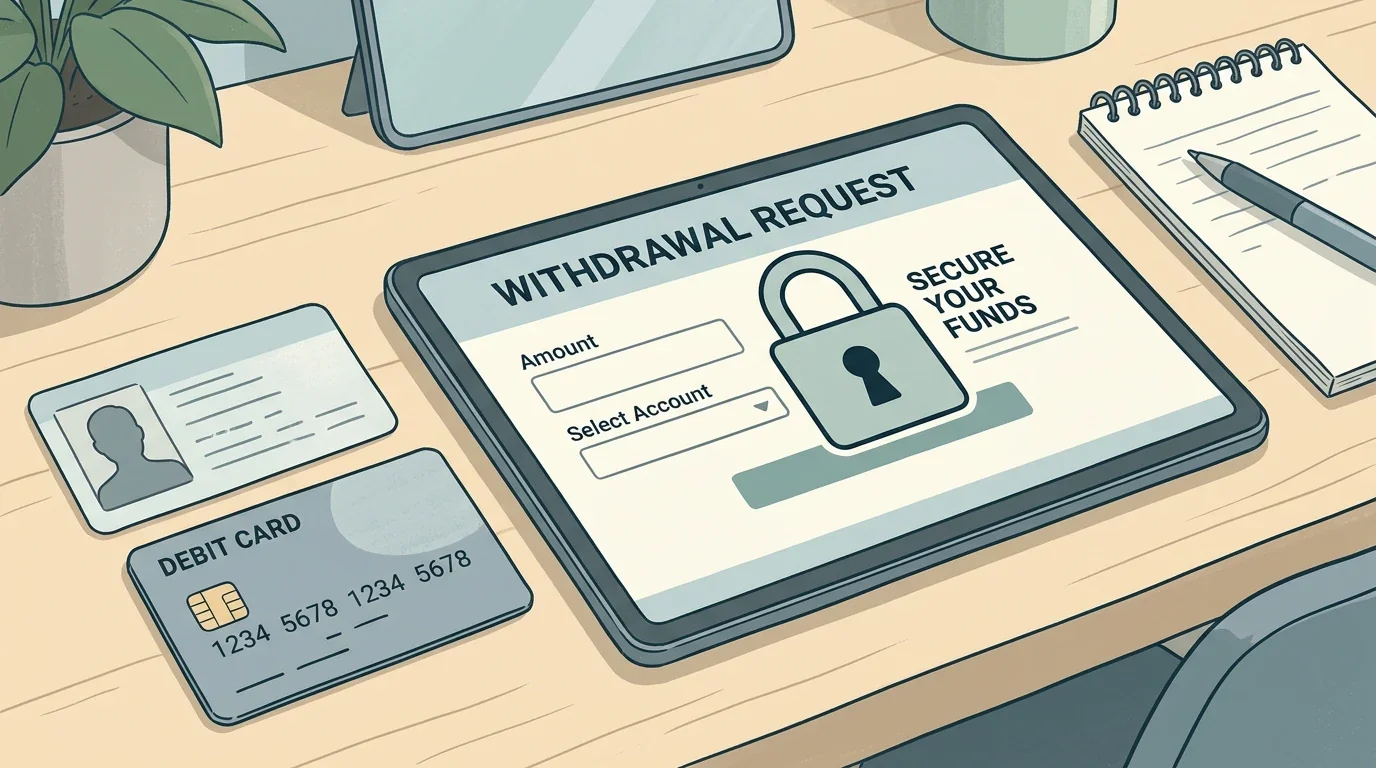
- Payments, identity checks and withdrawals need separate attention
- Infinite Radar
- What if there is a delayed withdrawal or dispute?
- Data and account information should not be an afterthought
- If protection tools are active, keep the protective frame
- A calm decision path
- Where to go next
- Key takeaway
- Common questions
Start with the plain meaning
In everyday use, “casino not on GAMSTOP” usually means an online gambling site is not covered by the GAMSTOP self-exclusion scheme. GAMSTOP is a self-exclusion service for participating online gambling companies licensed in Great Britain. When someone joins it, the purpose is to block access to those participating gambling websites and apps for the chosen exclusion period.
That definition matters because the phrase does not answer the bigger questions people often care about. It does not prove that a gambling site is licensed for Great Britain. It does not prove that complaints will be handled by an approved route. It does not prove that a payout will be smooth, that identity checks will be fair, that payment options are allowed, or that personal data will be handled in a way you are comfortable with. It simply tells you that the site is being presented as outside one protection scheme.
The safest way to read the phrase is therefore neutral and cautious: it describes a boundary, not a recommendation. If you are already self-excluded, using a bank gambling block, or trying to reduce gambling, the presence of that phrase should be a reason to pause. Protection tools are designed to add friction at a moment when friction can be helpful.
The short version
- Not on GAMSTOP is not a safety mark. It may mean the site is outside the GAMSTOP participating network, but that does not settle licence, complaints, payment or data questions.
- Great Britain licence status is a separate check. The Gambling Commission public register is the official place to check licensed gambling businesses, trading names and listed domains.
- Payment claims need caution. In the Great Britain regulated market, credit-card gambling payments are not accepted, including credit-card-funded e-wallet payments.
- ID checks are normal for licensed online gambling. Age and identity verification are part of regulated remote gambling, not automatically a warning sign by themselves.
- Protection tools should not be treated as obstacles. If a block or self-exclusion is active, the safer route is to keep the barrier in place and use support options.
What “not on GAMSTOP” says — and what it leaves unanswered
A careful reader should separate three things that are often blurred together: self-exclusion coverage, licensing for Great Britain, and the commercial terms of the site. A gambling site can display words about offshore licences, fast registration, flexible payments or large promotions, but none of those claims replaces a proper check of who operates the site, which market it is licensed for, what domains are listed, and how complaints are handled.
GAMSTOP itself is a protection service. Its role is not to judge every gambling site in the world. Its role is to help someone block access to participating Great Britain licensed online gambling companies for a chosen period. That is why “not on GAMSTOP” should not be read as a positive feature. For a person who chose self-exclusion, the phrase can be especially risky because it may appear at the exact point where the person is trying to keep distance from gambling.
The phrase can also be used loosely. Some pages use it to describe offshore gambling sites. Some use it to attract people who are blocked by GAMSTOP. Some use it without making clear whether a site is licensed, what country’s rules apply, or what protection a customer would have if a dispute happens. A responsible guide should not turn that uncertainty into a list of places to join. It should help the reader slow down and understand what must be checked.
Useful distinction
GAMSTOP coverage is about self-exclusion from participating licensed online gambling companies in Great Britain. Licence status is about whether the gambling business is licensed by the Gambling Commission for the Great Britain market. Commercial terms are the site’s own rules on deposits, withdrawals, bonuses, documents and complaints.
Those three areas can point in different directions. A website might claim it is outside GAMSTOP but still show a licence badge. A website might show an overseas licence but not appear on the Great Britain public register. A website might use a familiar brand-like name but have a different legal business behind it. A website might advertise quick withdrawals but reserve broad document checks in the terms. None of this can be solved by trusting a headline claim.
The licence check should come before the sales message
For a Great Britain reader, the Gambling Commission public register is the official starting point for licence checks. The register lets you check gambling businesses, trading names and domains that are linked to a licensed business. This is important because the name shown on a website may not be the legal business name, and a domain may not be covered just because a badge appears on the page.
A sensible check is not complicated, but it should be done in the right order. First, identify the legal business named in the website footer or terms. Then compare that name, any trading names and the website domain with the public register. If the site claims an overseas licence, treat that as a separate claim, not as a replacement for Great Britain licence status. If the site does not give a clear business name, domain match or complaint route, that is not a small detail; it affects what you can realistically expect if something goes wrong.

| Question | Why it matters | Safer next step |
|---|---|---|
| Is the business listed by the Gambling Commission? | The official register is the Great Britain licence reference point. | Check the legal name, trading names and domain, not only a homepage badge. |
| Does the website rely only on an overseas licence? | An overseas badge does not, by itself, show Great Britain licensing. | Treat the claim as incomplete until you understand the GB position. |
| Are the complaint and fund-protection details clear? | Those details shape what can happen if a withdrawal or account dispute arises. | Read the complaint process and customer-fund wording before depositing. |
| Is the site aimed at people who are blocked or self-excluded? | Official material treats targeting excluded people as a consumer-protection risk area. | Do not treat access around a block as a benefit; consider support options. |
For a more focused walk-through of this part, use the deeper guide on checking a Great Britain gambling licence. If you are still at the earlier stage of asking what the phrase means, start with the meaning of not on GAMSTOP.
Risk signs are often ordinary-looking details
The riskiest claims are not always the loudest ones. They are often small phrases that appear convenient: “no documents”, “instant withdrawal”, “no limits”, “no block”, “guaranteed payout”, “risk-free bonus”, or “works for excluded players”. A cautious reader should treat those phrases as prompts to read the terms, not as reasons to move faster.
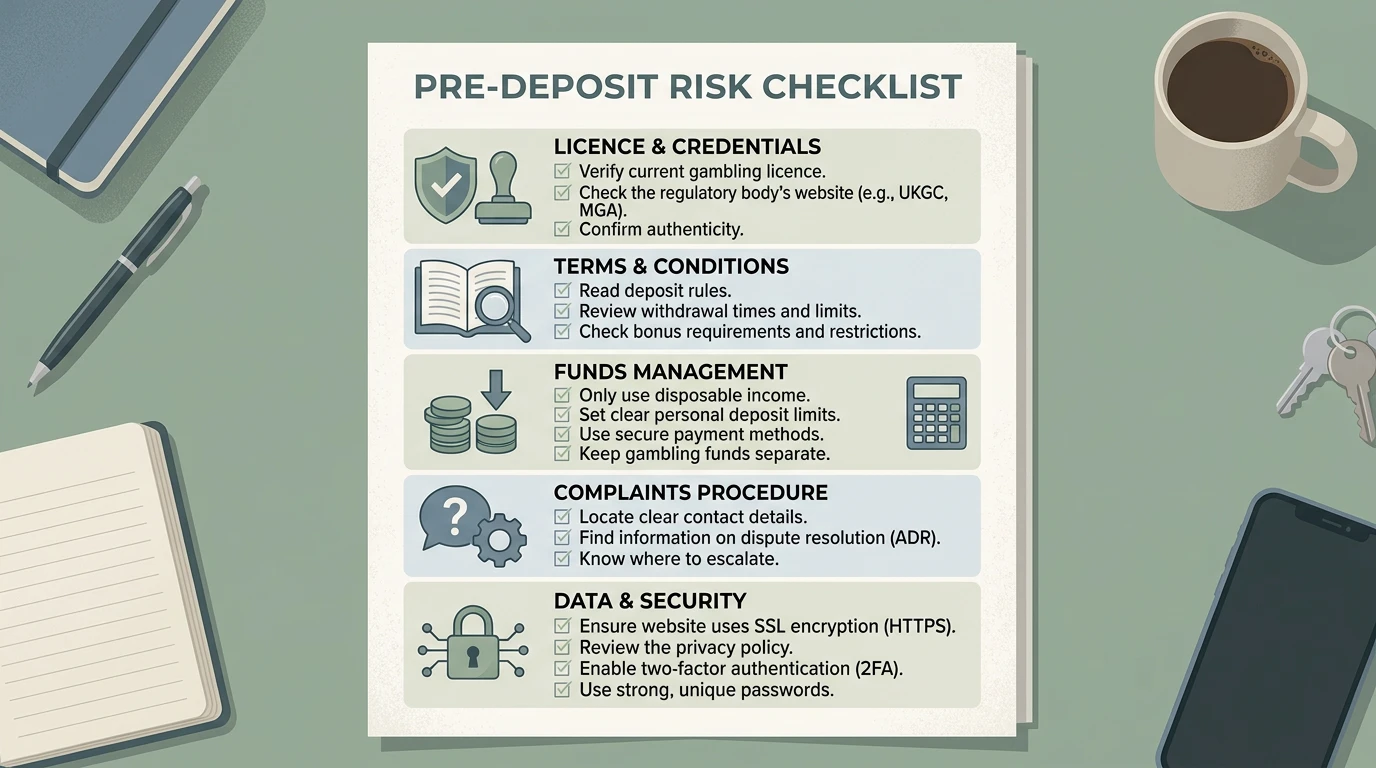
Independent pre-deposit check
Casino claim & licence risk check
Answer a few questions about what a gambling site actually shows. The result highlights unresolved checks before money or documents are involved.
This is an editorial screening tool, not a safety certificate or legal advice. A low score does not prove that a site is safe or licensed for Great Britain.
Review Priority Score
0/100
Stop and verify
Several important checks are unresolved. Treat marketing claims as unverified until the licence, business identity and terms are independently confirmed.
High review priority
Material gaps remain. Resolve the highest-weight checks before considering any deposit or document upload.
Review needed
Some important details still need checking. A lower score is not a safety mark.
Fewer unresolved signals
You reported fewer unresolved checks, but the tool does not independently verify any site or licence.
Protection tool active: stop comparison mode
The safer next step is to keep the barrier in place rather than use this score to compare access routes.
What needs attention
No unresolved signal was selected in the scored questions. This does not independently verify the site.
Before money or documents move
- Match the legal business, trading name and exact domain in the Gambling Commission public register.
- Read withdrawal, identity-check and bonus terms before depositing.
- Check the complaint route and customer-fund wording before relying on payout claims.
- Keep copies of terms and account messages if a dispute has already started.
The score measures unresolved review signals only. It does not verify a licence, predict a payout, or confirm that a gambling site is safe.
Risk map for common claims
- “No documents”: licensed online gambling involves age and identity checks. A site that suggests documents will never matter may still ask later, especially before withdrawal.
- “Instant withdrawal”: a payout can be delayed by identity checks, payment checks, bonus conditions, account reviews or unclear terms. The word “instant” is not a guarantee.
- “Huge bonus”: promotions usually come with conditions. Wagering rules, game restrictions, withdrawal caps and expiry dates can change the real value.
- “No limits”: regulated remote gambling must provide financial-limit facilities. A site that treats limits as a nuisance is sending the wrong signal.
- “No block”: bank blocks and self-exclusion tools are protective barriers. Language that turns them into something to defeat deserves extra caution.
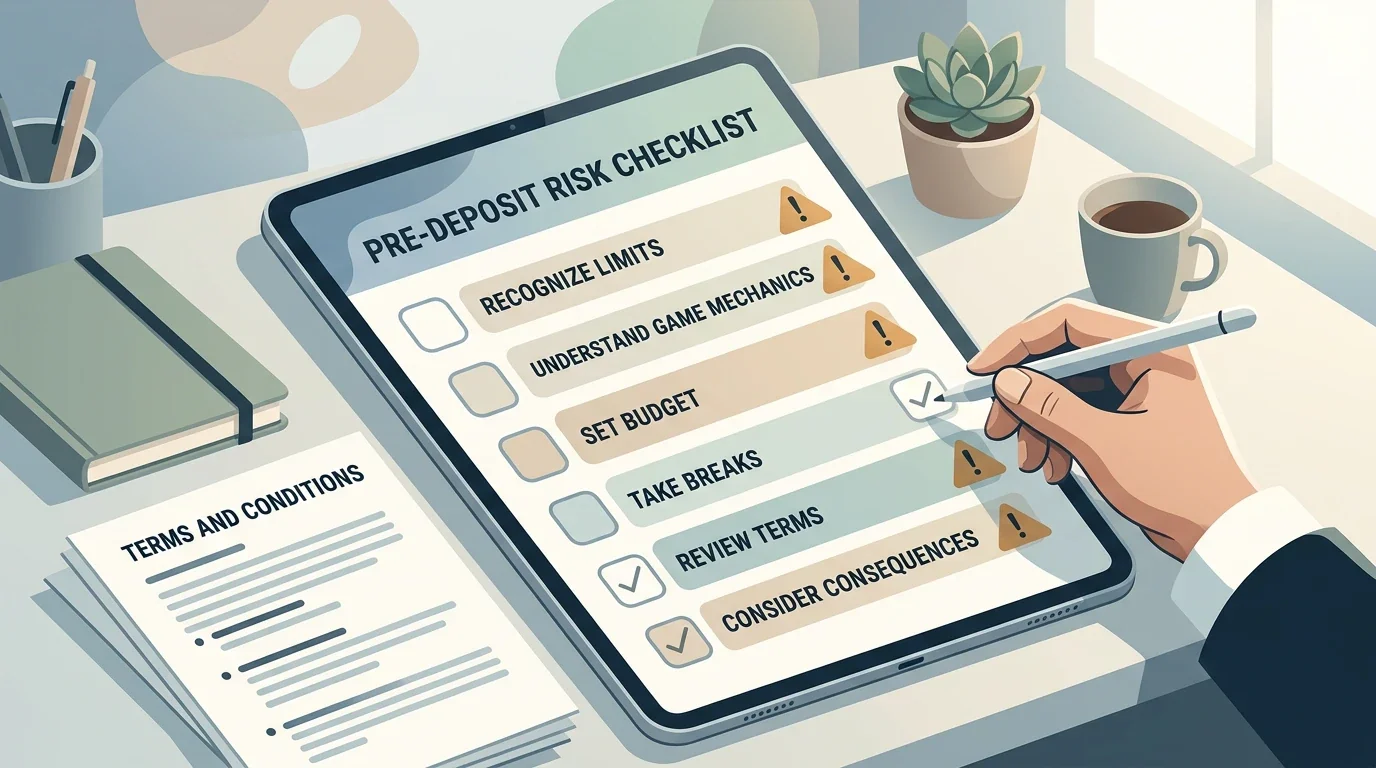
Trust is not created by a polished landing page. It is built from verifiable details: the licensed business behind the site, the exact domain covered, clear terms, clear complaint handling, transparent customer-fund wording, realistic withdrawal expectations and responsible language around gambling limits. If any of those details are missing, vague or hard to compare with official information, the safer conclusion is that more checking is needed.
Do
- Read withdrawal and bonus terms before depositing.
- Check whether customer funds have any stated protection if the business fails.
- Keep copies of terms and account messages if a dispute begins.
- Use bank blocks or self-exclusion tools when gambling feels hard to control.
Do not
- Assume a badge proves Great Britain licence status.
- Trust a claim that a payout is guaranteed.
- Use a site because it appears to sit outside a protection tool.
- Share identity or payment information with a site you cannot clearly verify.
For a more detailed neutral checklist, read risk signs before depositing. That page is designed for readers who want a practical review structure without a list of gambling brands.
Payments, identity checks and withdrawals need separate attention
Payment convenience is a major reason people look at gambling sites outside familiar protection systems, but payment wording can be misleading. In the Great Britain regulated market, gambling businesses must not accept credit-card gambling payments. This also covers gambling through e-wallets when the e-wallet has been funded by a credit card. If a site presents credit-card access as a selling point for a Great Britain customer, that is not a detail to ignore.
Identity checks should also be understood before money is at risk. Online gambling businesses licensed by the Gambling Commission must verify age and identity before gambling. That usually involves details such as name, address and date of birth. The key issue is not whether checks exist; it is whether the site explains them clearly, asks for information through a trustworthy process, and handles documents in a way that matches its privacy and security notices.
Payment and verification claims: careful reading
| Claim you may see | Careful interpretation | Question to ask before acting |
|---|---|---|
| Fast card deposits | Payment type and market rules matter. Credit-card gambling is not accepted in the GB regulated market. | Which payment methods are allowed, and are they described consistently in the terms? |
| No verification | Licensed remote gambling requires age and identity checks. Documents may still be requested later. | When can the site ask for documents, and can withdrawals be delayed during checks? |
| Instant withdrawals | Withdrawal timing can depend on checks, payment route, bonus terms and account review. | What exact withdrawal conditions are written before deposit? |
| No spending limits | Limits are part of safer gambling design in regulated remote gambling systems. | Can you set a limit easily, and is changing it handled safely? |
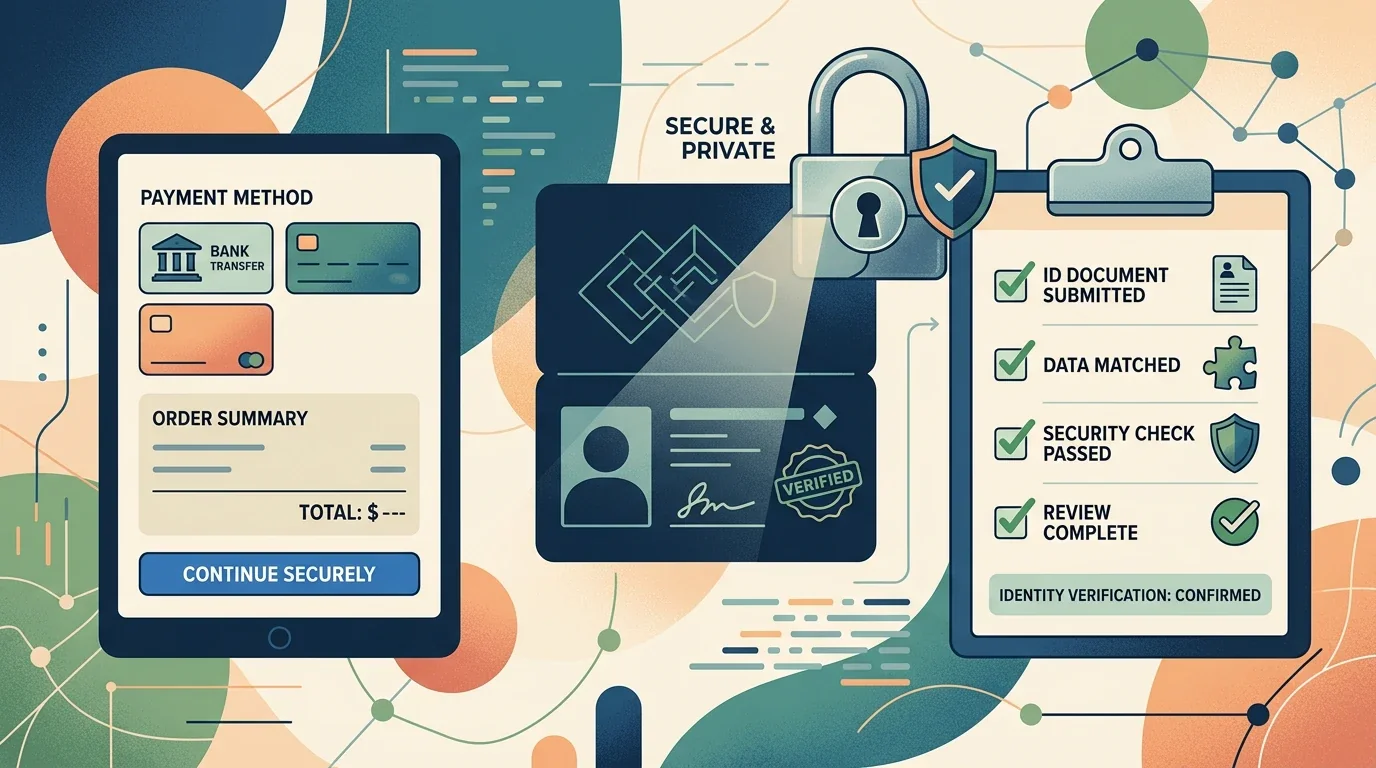
There are also financial vulnerability checks and financial-limit requirements in the Great Britain regulated market. Their purpose is protective. Public guidance should explain that these tools exist without turning the explanation into advice on avoiding them. If a reader is looking for a site mainly because it sounds less likely to check affordability, identity or limits, that is an important moment to pause rather than accelerate.
The practical rule is simple: do not let the deposit route distract from the withdrawal route. A deposit that takes seconds can still lead to a withdrawal that depends on identity checks, proof of funds, bonus conditions or account review. The deeper guide on payments, identity checks and withdrawals explains this part without naming payment availability for any brand.
What if there is a delayed withdrawal or dispute?
Disputes can happen for ordinary reasons: a document is rejected, a withdrawal is held for review, a bonus term is interpreted differently, an account is closed, or a customer believes winnings have been voided unfairly. In a licensed Great Britain setting, the official complaint route starts with the gambling business. If the complaint is not resolved, or if the customer is not satisfied after eight weeks, an approved alternative dispute resolution route may become relevant.
That route depends on the business being in the regulated system. If a site is unlicensed for Great Britain or operates only under an overseas framework, the expectations can be very different. It may be harder to use familiar complaint paths, and a UK reader should not assume that the Gambling Commission can resolve an individual money dispute with an unlicensed offshore site. This is why licence status is not a minor technical point; it affects practical options later.
Worked example: a withdrawal slows down
Imagine a reader deposits after seeing a fast-withdrawal claim. Later, the site asks for identity documents and says the withdrawal is under review. The careful response is not to argue from the advertisement alone. The reader would need the terms that applied at the time, copies of account messages, the identity-check request, the payment route used, bonus conditions if any, and the site’s complaint process. If the business is licensed for Great Britain, the official complaint and dispute route gives a clearer framework. If it is not, the route may be much less certain.
Good preparation is boring but useful: keep records, read the complaint process before depositing, avoid relying on chat promises that contradict written terms, and understand whether an independent dispute body is named for licensed complaints. None of this guarantees an outcome, and this guide does not give legal advice, but it can help set realistic expectations before money is committed.
If a problem has already happened, the next step is to focus on documentation and the official complaint route rather than opening more accounts. The deeper page on complaints and disputes covers common issues and what to keep.
Data and account information should not be an afterthought
Gambling accounts can involve sensitive information: identity details, address history, payment records, gambling activity, account messages and sometimes financial evidence. UK data-protection rights can be explained at a general level, but a specific site’s practices depend on its own privacy notice, business location, processors and rules. That is why a reader should not share documents with a site unless the business behind it is clear and the privacy information is readable.
A practical data check is simple. Look for the legal business name, privacy contact route, what information is collected, why it is collected, how long it may be kept, who it may be shared with, and how rights requests are handled. If the privacy notice is vague, copied-looking, hard to find or inconsistent with the business name on the gambling terms, that weakens trust. It does not prove harm by itself, but it gives you another reason to stop and review.
Before sharing documents
- Can you identify the legal business and match it with licence information?
- Do the privacy and account terms use the same business identity?
- Does the site explain why documents are needed and how they are handled?
- Is the complaint route clear if documents are rejected or a withdrawal is paused?
- Would you still share the information if there were no bonus or urgency message?
If protection tools are active, keep the protective frame
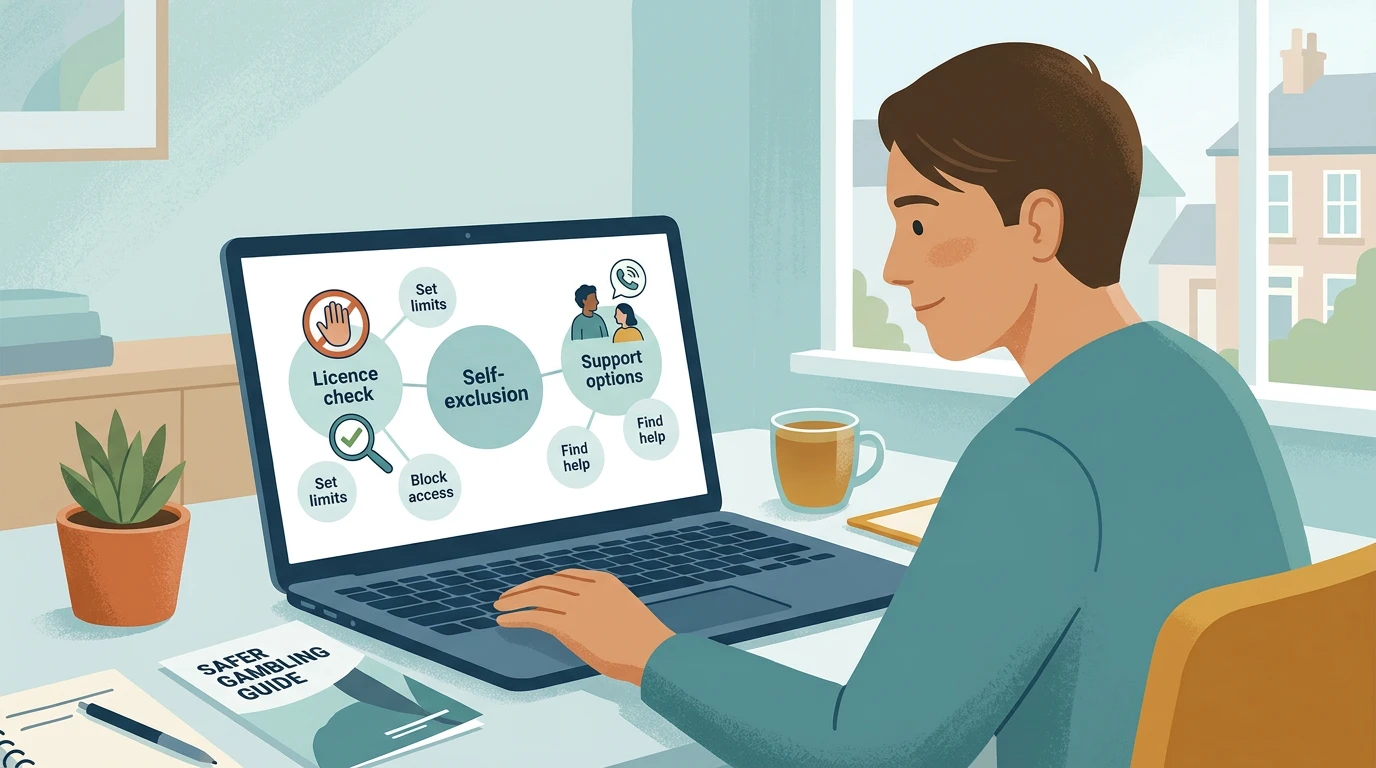
Some readers arrive at this topic because they are curious. Others arrive because a block, self-exclusion or bank tool is already stopping them from gambling. Those situations need different levels of caution. If you are already self-excluded through GAMSTOP, using a bank gambling block, or trying to stop gambling, looking for a site outside that barrier can undo the exact protection you chose.
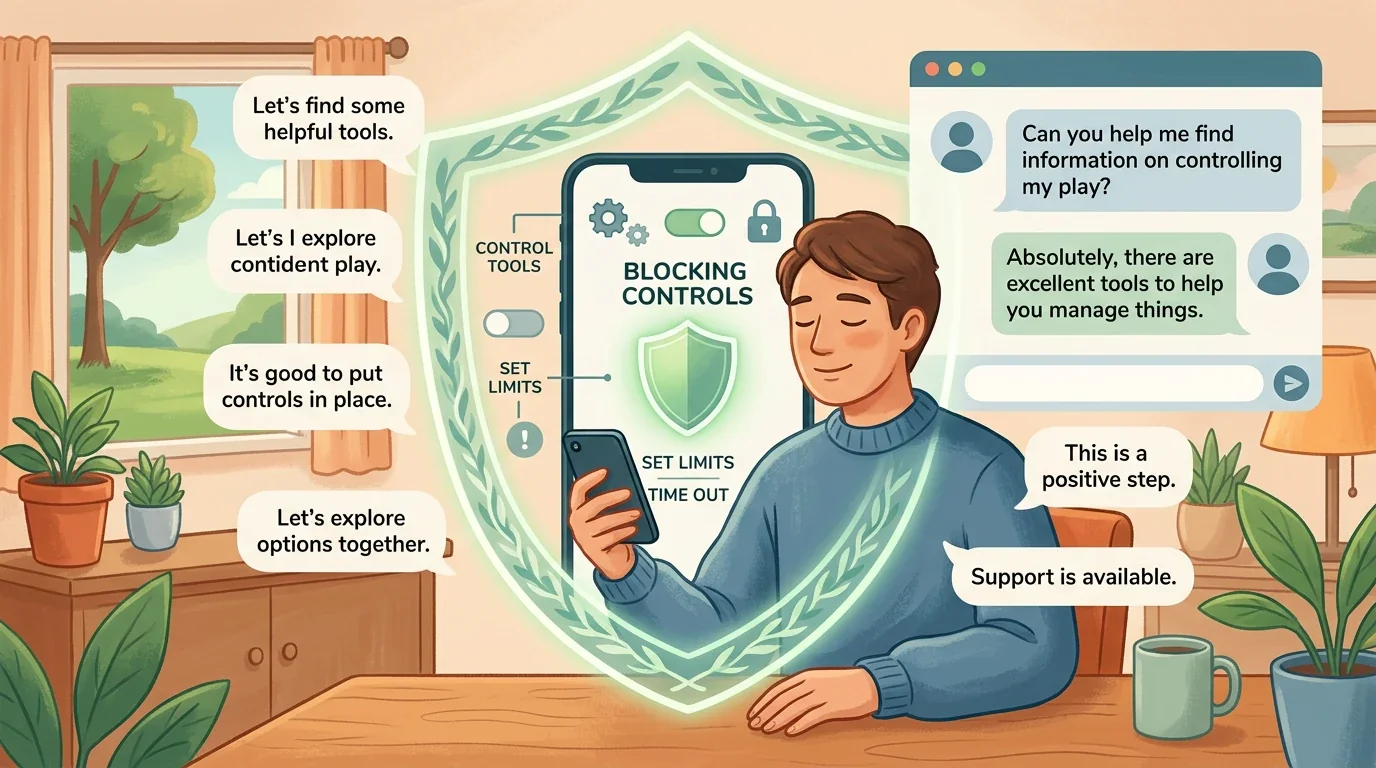
GAMSTOP, bank gambling blocks and blocking-support routes are not punishments. They are practical barriers. They can reduce the speed of an urge, make online gambling harder to access, and create time to talk to someone or use other support. GambleAware, GamCare and TalkBanStop are recognised support and signposting routes in this area. This page does not publish hotline details because contact details should be checked directly on the official service pages before use.
When to step away from comparison mode
If the main reason for looking at a site is that GAMSTOP, a bank block or another barrier is stopping gambling, pause the comparison. Do not treat the barrier as an inconvenience to solve. Consider using official support pages, speaking to a trusted person, or adding another protective layer such as a bank gambling block or blocking software.
For more detail, use the guide to control tools and gambling support. It keeps the focus on protection, support and practical next steps rather than on gambling access.
A calm decision path
- Define the phrase. Are you only seeing a “not on GAMSTOP” claim, or do you know the actual licensed business behind the site?
- Check the licence boundary. For Great Britain, use the Gambling Commission public register and compare the business name, trading names and domain.
- Review the terms before money moves. Look at withdrawals, bonus rules, customer-fund protection, complaint handling and identity checks.
- Separate convenience from safety. Faster registration or broader payment wording does not remove the need for verification.
- Respect protection tools. If self-exclusion or bank blocking is active, the safer path is support, not a new route around the barrier.
- Document problems early. If a dispute begins, keep account messages, terms, payment records and complaint correspondence.
Where to go next
Key takeaway
A “casino not on GAMSTOP” claim is not a shortcut to a safe choice. It is a reason to separate self-exclusion coverage from Great Britain licence status, payment rules, identity checks, complaint routes, data handling and personal risk. If a protection tool is already in place, treat that protection as useful. If you are still comparing information, use official checks first and avoid any site that asks you to trust a headline instead of verifiable details.
Common questions
Does not on GAMSTOP mean a site is safe?
No. It only suggests the site is outside the GAMSTOP participating scheme or is presenting itself that way. Safety depends on separate checks, including licence status, domain matching, complaint handling, payment rules, document handling and safer-gambling controls.
What should a Great Britain reader check first?
Start with the Gambling Commission public register. Compare the legal business name, trading names and domain. Do not rely only on a logo, a footer badge or an overseas licence claim.
Are identity checks a warning sign?
Not by themselves. Licensed online gambling in Great Britain involves age and identity checks. The warning sign is unclear, inconsistent or late-stage document handling that was not explained before deposit.
Is it sensible to look for ways around a gambling block?
No. Blocks and self-exclusion tools exist to create protective friction. If a barrier is active, the safer step is to keep it in place, add support if needed, and avoid content that frames access around the barrier as a benefit.
Created by the "Casino not on Gamstop" editorial team.