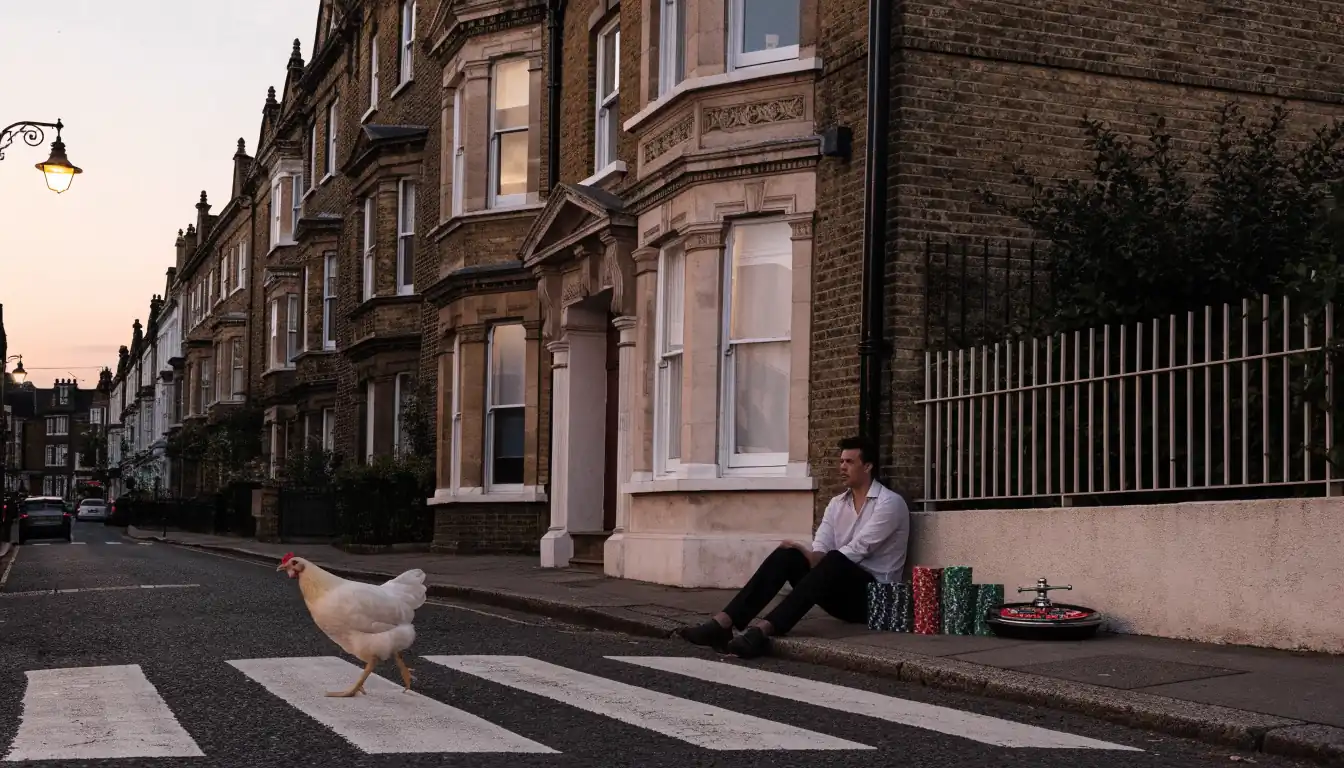
Live Blackjack Online Casinos in the UK: How They Work
Live dealer blackjack combines a real-time table stream with software for player choices, while casino authorisation must be checked separately.
 Available in GB

Table of Contents
- What Makes a Blackjack Casino a Live Casino?
- How to Assess an Online Blackjack Casino
- Top online casinos in the UK
- Who Regulates Online Casinos in Great Britain?
- Live Blackjack Tables and Casino Providers
- Which Live Casino Games Can You Expect?
- How to Play Blackjack Online
- How Blackjack Works at a Casino Table
- A Cautious Approach to Blackjack Strategy
- Bonuses, Deposits and Payment Checks
- Blackjack Rules and the Limits That Do—and Don’t—Apply
What Makes a Blackjack Casino a Live Casino?
Online blackjack can be presented in more than one format. In a live dealer game, a real person runs the table, and a video stream shows the action as it happens. You make your choices through the casino’s interface while the dealer handles the cards. The screen therefore combines a broadcast of a physical table with software that records your decisions and displays the game state.
That differs from a computer-generated blackjack game, where software produces the cards and outcomes without a live dealer on screen. Both formats are played online, but the experience is not the same: a live table lets you watch a dealer conduct the game, while a simulated version presents the action through graphics and animations. Neither format changes the need to understand the table’s terms before staking money.
The word “live” describes how the table is presented; it does not, by itself, tell you who operates the casino or whether the site is authorised to serve you. For consumers in Great Britain, remote gambling operators must hold the relevant Gambling Commission licence. A polished stream is not evidence of that licence, just as a computer-generated table is not evidence that a casino is unlicensed.
Before you play, separate the questions. First, identify whether the table is genuinely dealer-led or software-generated, and read how the casino describes its game. Then consider the operator behind it, the conditions attached to the table, and whether the site is authorised to offer remote gambling to people in Great Britain. Those checks matter whichever format you choose; the live presentation should not distract from them.
Live blackjack may feel closer to sitting at a casino table, but it remains gambling through an online account. The pace and presentation can influence how readily you keep playing, so decide in advance what you can afford to lose and stop when that amount is gone. A live dealer cannot change the underlying financial risk.
Fast payout online casinos in the UK: what claims mean
The useful distinction, then, is not that one format is automatically safer or fairer. It is that live blackjack puts a human dealer and a real-time video feed at the centre of the experience, while other online versions simulate the table on screen. Assess the operator as well as the format before choosing where to play.
How to Assess an Online Blackjack Casino
A shortlist of blackjack casinos is more useful when it is built around evidence than around a “best” label. A site can look polished and offer several tables, but neither tells you whether the business behind it is authorised to serve players in Great Britain. Start by identifying the operator, then check its licence on the Gambling Commission’s public register before deciding whether to open an account.
The operator’s name may differ from the name displayed on a casino website. Look for the legal business name in the site’s terms or other company information, and compare it with the register entry. Check that the entry covers remote gambling and that the operator is licensed to serve customers in Great Britain. A familiar brand name by itself is not confirmation: the company and its authorisation need to match.
Check the website address as well as the business name. A licence entry for one company or domain should not be treated as proof that a different site is covered. If the register lists several trading names or websites, make sure the address you intend to use is among the details associated with the licensed operator. If you cannot make a clear match, do not treat the uncertainty as a minor technicality.
A dated check also has limits. The Gambling Commission register dated 26 September 2026 did not identify a LuckyPays entry under that brand or its stated domain, including luckypays.io. That is a finding about the register on that date, not a claim that the register will always show the same result. If you are considering a site using the LuckyPays name, check the current register yourself and look for a matching licensed business and domain before proceeding. A casino’s own statement about its status is not a substitute for that check.
- Check the operator’s licence on the Gambling Commission’s public register
- Verify that the website address matches the licensed operator
- Identify the legal business name in the terms
- Use a comparison note for each site
- Trust a familiar brand name as confirmation of authorisation
- Treat a dated register check as current evidence
- Rely on a casino’s own statement about its status
- Treat an unmatched domain as a minor technicality
Once the licence check is clear, compare the practical information that affects your experience. Read the terms for the blackjack games you are considering, including how the table works, what choices are available and whether the displayed rules are easy to find before you join. Do not assume that two tables with the same game name have identical conditions. If important terms are unclear or difficult to locate, that is a reason to pause rather than fill in the gaps yourself.
Look at the route for raising a complaint, too. A licensed casino should explain how to complain to the operator and how to access an approved Alternative Dispute Resolution service if the issue remains unresolved. That does not mean every complaint will have the outcome you want; it means the route should be stated clearly enough for you to use. The same goes for account controls: check that the site makes its gambling tools accessible rather than relying on general assurances.
Promotional language is not a reliable measure of quality. A large welcome offer or a claim to be the leading online blackjack casino tells you little about the operator’s status or whether its terms suit you. If an offer is part of your comparison, read its conditions separately and do not let it distract from verifying the licence. Equally, a shorter list of tables does not by itself make a casino unsuitable. What matters is whether the operator is authorised and whether the information you need is available and understandable.
Online Keno Casinos in the UK: What to Check
You can use a simple comparison note for each site: the licensed business name, the matching website address, the register result and any unresolved questions about the terms or complaint process. This makes it easier to compare casinos without pretending that there is a single objectively best blackjack casino for every player. A recommendation that does not show how the operator was checked is not a substitute for your own verification.
If the register does not show a clear match, contact the operator for an explanation, then verify any details it provides against the Commission’s register. Do not rely on a logo, an unsupported licence number or a claim that the business is regulated elsewhere. For a casino serving Great Britain, the relevant question is whether the operator has the required Gambling Commission authorisation for that market.
Finally, treat the decision to play separately from the decision about which site to use. A valid licence is an important check, not a reason to wager more or to expect a particular result. Set a limit that fits your circumstances, and only gamble what you can afford to lose.
Top online casinos in the UK
- x3betBonus: Welcome Pack 100% Up to £1.000 + 200 Free Spins · Payout speed: 1-3 business days
- SpinFormulaBonus: 550% Up To £15,000 + 550 FS · Payout speed: 1-3 business days
- NightWinBonus: £900 + 400 free spins · Payout speed: 1-3 business days
- BritsinoBonus: Welcome Package – Get your £2,200 + 2,000 FS · Payout speed: 1-3 business days
- JetsetspinsBonus: 200% Bonus + 100 Free Spins + Free Royal Wheel · Payout speed: 1-3 business days
- ChanzeBonus: Slots Welcome Bonus #1 200% up to €500 · Payout speed: 1-3 business days
Who Regulates Online Casinos in Great Britain?
The regulator responsible for commercial gambling in Great Britain is the UK Gambling Commission. Its remit includes online casinos, so it applies to casino gambling offered over the internet as well as gambling provided in person. For someone considering a blackjack table online, this matters because the operator’s location does not decide whether British oversight applies.
The UK Gambling Commission regulates remote gambling offered to people in Great Britain, even if the equipment running the service is based outside the UK.
The Commission also regulates remote gambling offered to people in Great Britain when the equipment that runs the service is based elsewhere. A company cannot avoid the British licensing framework simply by hosting its website or gambling systems abroad. The relevant question is whether it is offering remote gambling to consumers in Great Britain.
This distinction helps explain what people mean by a regulated casino in this market. A site may be accessible from a British address, but access alone does not make it part of the UK regulatory system. For real-money gambling offered to consumers in Great Britain, the operator must hold the relevant Gambling Commission licence. That requirement applies to blackjack as it does to other casino games.
The Commission’s place in the system
The Gambling Commission is the sole regulator for commercial gambling in Great Britain. It oversees the licensing framework under which businesses may offer gambling and individuals may carry out certain regulated roles. The Commission’s remit covers more than online casinos, but its responsibility for remote gambling is directly relevant when you are considering an online blackjack casino.
The wider legal framework includes the Gambling Act 2005, which governs gambling in England, Wales and Scotland. Northern Ireland has a separate legal framework, so references to Great Britain should not be treated as interchangeable with the whole United Kingdom in every legal context. In ordinary discussion, “UK casino” is often used broadly, but the Commission’s stated remote-gambling remit concerns services offered to consumers in Great Britain.
Fast casino withdrawals in the UK: what affects speed
That distinction is not a technicality for operators alone. The regulator’s authority is tied to the market in which the gambling is offered, rather than only to the country where a business is incorporated or where its servers are kept. A blackjack site based outside Britain can therefore still fall within the Commission’s licensing system if it serves consumers here.
Business licences and personal licences
The Commission grants operating licences to businesses that provide gambling services. These licences relate to the company’s role as an operator: the business is the party offering the casino and taking responsibility for running the service within the regulated market. A personal licence is different. It is issued to an individual performing a role in gambling operations in Great Britain.
In other words, these are not two names for the same approval. An operating licence concerns the business; a personal licence concerns a person working in a relevant capacity. The existence of one does not, by itself, explain the status of the other. The distinction also shows why regulation is not simply a matter of a casino displaying a regulator’s name: the framework covers both the organisation providing gambling and certain individuals involved in its operation.
For players, the key point is that the operator offering an online blackjack casino to Great Britain must be within the applicable licensing system. The Commission’s role is regulatory, not promotional: it does not recommend a particular casino or guarantee that a player will win. A licence indicates that the business is operating under the local regulatory framework; it does not change the underlying uncertainty of a casino game.
Regulatory Framework
- The Gambling Commission is the sole regulator for commercial gambling in Great Britain
- Operating licences apply to businesses, while personal licences apply to individuals
- Licensing ensures a business operates under the local regulatory framework
- A licence is a regulatory requirement, not a guarantee of winning
What the regulator’s remit means for blackjack
Blackjack is a casino game, and offering it online for real money is part of remote gambling. The same regulatory question therefore applies whether a site offers a live dealer table or another online version: is the business providing gambling to consumers in Great Britain within the Commission’s licensing framework? The format of the table does not remove the operator from that framework.
This is why “Blackjack casinos UK” can describe very different businesses in casual conversation, while the legal distinction is more precise. A site may be reachable, may accept registrations, or may present itself as serving British players; those details do not themselves establish that it holds the required local licence. The Commission is the body responsible for commercial gambling oversight in Great Britain, and the operator’s obligations follow from the service it offers into that market.
The framework also makes clear why the physical location of key equipment is not a reliable guide to regulatory status. Online services can be run across borders, but the Commission’s remit extends to remote gambling offered to consumers in Great Britain regardless of where that equipment sits. For you, the relevant issue is not whether a blackjack casino has a British office or a domestic server. It is whether the business offering the gambling is subject to the applicable British licensing regime.
Crazy Time Live Casino Game in the UK: What to Check
Regulation does not remove every risk associated with gambling, nor does it make a blackjack wager a dependable way to make money. It identifies who oversees the commercial activity and the licensing structure within which a lawful operator must work. Understanding that responsibility gives you a clearer basis for judging what a casino’s regulatory claims mean, without confusing the regulator’s role with an endorsement of any particular table. Only gamble what you can afford to lose.
Live Blackjack Tables and Casino Providers
Grosvenor’s live casino history offers a useful starting point for understanding how live blackjack became part of an online casino’s table selection. The operator first introduced its live casino games in 2013, with card and casino games that included Blackjack, Texas Hold’em and Roulette. That launch placed streamed table play alongside other casino formats, rather than treating blackjack solely as a computer-generated game.
A live table is built around a dealer and a physical or studio-based game, with the action shown to players through a video stream. The online interface connects the viewer to the table: it displays the current hand, available decisions and controls for placing a wager. This arrangement differs from software that deals cards entirely through a digital game engine. The screen may look similar, but the source of the action is different.
The provider’s role is to create and operate the live-table experience. That can involve the studio production, the dealer presentation, the game software and the interface that carries table activity to a player’s device. The casino operator, meanwhile, makes the table available through its own site or app. Those roles are related but not interchangeable: a familiar casino brand does not necessarily produce every game it hosts, and a game provider is not necessarily the operator holding a player’s account.
Casino Operator The business that makes the table available through its site or app and holds the player’s account.
Game Provider The entity that creates the live-table experience, including studio production, dealers, and software.
Live Dealer The real person who conducts the game and presents the cards on a real-time video stream.
For blackjack, the live format is recognisable because the dealer presents the cards and progresses the hand on camera. The digital interface still matters. It must show the cards clearly, provide the relevant controls and communicate when decisions are available. A stream can make a game feel closer to a casino table, but the practical experience also depends on how well the video and controls work together.
Live tables can be offered in different presentations. Some are designed around a standard table layout; others may use a more distinctive studio or branded setting. The visual style is not, by itself, evidence of a different game or a different level of service. When comparing a live dealer blackjack casino with one offering automated blackjack, the useful distinction is whether a dealer conducts the game on screen or the game is generated by software.
Grosvenor’s 2013 launch is a historical marker, not a guarantee that every listed game or presentation remains available today. Online casino menus can change, and a provider’s catalogue can appear differently across operators. It is therefore more useful to identify the format you want than to assume that a particular brand name tells you exactly what a table will look like.
If you prefer the visible presence of a dealer, look for a clearly labelled live table and check that the game opens as a streamed session rather than an automated version. If you are comparing providers, pay attention to the table presentation and interface, not just the game title. Blackjack may be the same broad game, while the pace, camera view and on-screen layout differ between tables. A live dealer table brings the human presentation into the online session; it does not remove the need to understand what you are opening.
French Roulette at UK Online Casinos: Rules
Which Live Casino Games Can You Expect?
A live casino catalogue can extend well beyond blackjack. Depending on the operator, you may find familiar card tables alongside roulette and other casino-style games, each presented as a separate option. Grosvenor’s live casino launch in 2013 included Blackjack, Texas Hold’em and Roulette, illustrating how card and non-card tables can sit within the same live offering.
Blackjack is a natural starting point if you want a table game built around cards. Casinos may show more than one blackjack table or format, so check the table name and its displayed rules before choosing. A title such as Infinite Blackjack signals a named game variant, but the title alone is not enough to tell you how its rules or table features differ. Read the information shown for that specific table rather than assuming every version works identically.
Poker tables offer a different kind of card game. Texas Hold’em is one example found in Grosvenor’s historical live-game range. If you are comparing it with blackjack, the distinction is not simply that both use cards: the games have different formats and involve different decisions. Look at the table description to understand what you are joining, rather than selecting by name alone.
Examples of Live Casino Games
- Blackjack: Card tables with various named variants like Infinite Blackjack.
- Poker: Card games such as Texas Hold’em.
- Roulette: Non-card tables, including versions like Lightning Roulette.
- Specialty Games: Format-specific titles such as Crazy Time, Dream Catcher, and Common Draw.
Roulette provides a non-card alternative. Its presence alongside blackjack and poker can make a live casino feel like a broader table-games area rather than a single-game destination. Named titles such as Lightning Roulette are also worth distinguishing from a generic roulette label: check the individual game information to see what the particular version offers. A title is a clue, not a substitute for reading the rules.
Some live-casino menus also include games that do not resemble traditional card tables. Names such as Crazy Time, Dream Catcher and Common Draw may appear in catalogues as distinct products. Treat each as its own game, and use the on-screen description to understand its format before you play. If you are looking specifically for blackjack, these alternatives are relevant mainly as a way to compare the wider selection around the tables.
When comparing a casino’s live games, consider whether the range matches what you want to play: blackjack alone, several card games, roulette, or a mix of table and other formats. Check that the game is labelled as live if you want a live-table experience, and review the rules and available information for the individual title. A large menu is not automatically a useful one; the right choice is the game whose format you understand and intend to play. Whatever you choose, only gamble what you can afford to lose.
How to Play Blackjack Online
Starting an online blackjack session involves more than opening a table. You need to access an operator’s site or app, complete its account checks and choose a game that suits the way you want to play.
Online Bingo UK: Rooms, Slots and Costs
Begin by creating an account and supplying the requested personal details. The operator must verify your age before it allows you to deposit funds. Online gambling in the UK is for adults aged 18 and over when the operator holds a UK Gambling Commission licence. You may also be asked to confirm your identity; follow the operator’s instructions and provide information that matches your documents.
Before making a first deposit, a remote operator must prompt new customers to set a financial limit. Take time to choose a limit you can live with, and check where to change it later. An account limit is a practical boundary, not a way to make gambling risk-free.
Once the account is ready, open the casino lobby and look for blackjack. A table may be presented as a live game with a streamed dealer or as a computer-generated version. Check the game information before joining: it should explain how that particular table works, any available options and the stakes it accepts. Do not assume that every table has the same format.
If you are not ready to use real money, see whether the operator offers a free-play or demo mode. Where available, it can let you familiarise yourself with the screen and controls without placing a real-money wager. Treat it as a way to learn the interface, not as a prediction of how paid play will feel or turn out. If no free mode is offered, you do not need to deposit simply to explore other information on the site.
Starting a Session
Step 1: Account Creation Create an account, supply personal details, and complete the age and identity verification process.
Step 2: Financial Limits Set a financial limit before making your first deposit as prompted by the operator.
Step 3: Game Selection Browse the lobby for blackjack and review the specific table’s rules, format, and stake conditions.
Step 4: Table Entry Join a paid table or use a free-play demo mode to familiarise yourself with the controls.
When you are ready to join a paid table, select it and check the displayed stake conditions before confirming your place. Keep the session within the limit you set, and stop if you find yourself chasing losses or feeling pressured to continue. A quick exit from the table is often simpler than trying to recover a session that has gone badly.
The steps are similar whether you play blackjack through a desktop browser or a mobile device, although the layout may differ. Take a moment to locate the account controls and the option to leave the table before play begins. Only gamble what you can afford to lose.
How Blackjack Works at a Casino Table
Blackjack is a comparison between your hand and the dealer’s. The aim is to finish with a hand closer to the table’s target than the dealer’s, without going over it. If your total exceeds that ceiling, you bust and lose the hand. If the dealer busts while your hand remains in play, you win; if neither side busts, the higher total wins. A tie is generally called a push, though the table’s rules explain how it is settled.
Cards have values that determine the hand total. Number cards count at face value, while picture cards count as ten. An ace can count as either one or eleven, whichever helps the hand without making it bust. A hand made from an ace and a ten-value card on the initial deal is commonly called a natural blackjack. The table rules matter: details such as how a natural is settled can vary.
At the start of a hand, players place their wagers in the marked betting areas. The dealer deals cards to each player and to themself, following the table’s dealing procedure. In a live game, the cards and dealing are handled at the table; in a digital version, the interface displays the cards and available actions. Either way, you make decisions about your own hand before the dealer completes theirs.
The basic choices are to take another card, known as hitting, or keep your current total, known as standing. Some tables also offer options such as doubling a wager or splitting a pair, but availability and conditions depend on the table rules. These choices change how the hand proceeds; they do not alter the cards already dealt. If you are unsure what an option does, check the table information before using it.
Once players have finished acting, the dealer completes the hand according to set rules, rather than choosing freely in response to each player. The dealer’s final hand is then compared with each live player hand to determine the result. This is why a player can lose even with a strong total: the dealer may finish closer to the target, or the player may have already busted.
Gambling Risks
Blackjack is gambling through an online account; always decide in advance what you can afford to lose and stop when that amount is gone.
Blackjack is not an online slot. A specialist casino review reports that Great Britain’s online slot stake limits do not apply to blackjack or roulette. That is an account from a particular type of source, rather than a reason to assume every table has identical terms. Check the rules displayed for the game and the wager limits set by the operator. A table’s own limits can affect the amount you are able to stake, but they are distinct from slot-specific limits.
When comparing a physical and online casino table, the same basic sequence applies: wager, receive cards, decide whether to draw or stand, then compare hands after the dealer acts. Online interfaces may present additional options, but the rules panel should explain what they do and when they are available. Read it before play rather than relying on assumptions carried over from another table.
A Cautious Approach to Blackjack Strategy
A blackjack strategy is best treated as a way to make decisions more consistently, not as a method for securing a profit. Choices at the table affect how you play, but they cannot remove chance or guarantee that a session will end in your favour. That remains true whether you play against a live dealer or use another online format.
Before you start, decide what you can afford to lose and set that as a firm limit. Do not raise it to recover losses or continue simply because you expect a run of better results. If you find it difficult to stop, take a break rather than trying to solve the problem with a more elaborate strategy.
It can help to choose your approach before play begins. A written strategy guide can give you a consistent reference for decisions, but check that it relates to the version of blackjack you are playing. Table rules can differ, so advice intended for one format may not fit another. Treat a guide as support for decision-making, not as a promise about the outcome of any hand.
Keep your wager at a level that lets you follow your plan without feeling pressured to make impulsive changes. Avoid increasing it because you have won or lost several hands; past results do not guarantee what happens next. If the stakes make it hard to think clearly, stop and reassess rather than playing on under pressure.
There is also an important distinction between blackjack and online slots. A specialist casino review states that Great Britain’s online slot stake limits do not apply to blackjack. Do not assume that a limit applying to one type of game sets a safe stake for another. For blackjack, your own spending boundary matters: decide it in advance and do not treat a larger permitted wager as a recommendation.
A cautious approach is not about finding a system that beats uncertainty. It is about understanding that strategy has limits, making decisions deliberately, and stopping when play is no longer within the boundaries you set. Only gamble what you can afford to lose.
Blackjack Safety Check
- Set a firm financial limit you can afford to lose
- Verify the operator’s licence on the Gambling Commission register
- Confirm the payment method is not a credit card
- Read the specific bonus terms and withdrawal restrictions
- Review the table rules for the specific blackjack variant
Bonuses, Deposits and Payment Checks
A blackjack casino bonus can make an offer look more generous than it is. Before accepting a promotion, read its terms alongside the cashier information. Check which games qualify, whether blackjack contributes towards any stated conditions, when the offer expires, and what restrictions apply to withdrawals. These details determine whether a bonus is useful to you; the headline description does not.
A no-deposit offer still comes with terms. Confirm what you must do to claim it, whether winnings can be withdrawn, and whether any playthrough or other conditions apply. If the conditions are unclear or difficult to find, do not assume the offer is unrestricted. You can decline a promotion and deposit without taking it, if that is what the account terms allow.
Before transferring money, verify the operator’s licence number on the Gambling Commission’s public register. The Commission requires remote operators serving consumers in Great Britain to hold the relevant licence. Check that the register entry matches the operator and the website you intend to use; a logo or licence claim displayed on a casino page is not a substitute for checking the public record.
Payment rules matter too. Remote gambling operators cannot accept credit-card payments for gambling, including credit-card funding routed through a money service business. A digital wallet is not a workaround if it allows credit-card funds to be used for gambling. Use a permitted payment method and check the cashier’s terms before making a transfer.
Operators must verify your age before allowing you to deposit. New customers must also be prompted to set a financial limit before their first deposit, with account-level controls available to manage limits. Consider setting a limit that fits your budget before funding the account, rather than deciding after play has started.
Keep the deposit method, bonus terms and licence check together as one decision: do not fund an account simply because an offer appears time-limited or attractive. If anything about the payment route or conditions is unclear, pause and seek clarification before depositing. Only gamble what you can afford to lose.
Live Roulette UK: English-Speaking Dealers
Blackjack Rules and the Limits That Do—and Don’t—Apply
When checking blackjack rules at a casino, it helps to separate the rules of the game from limits that apply to a different type of gambling. Blackjack is not an online slot, so the Great Britain stake caps for slot games do not set the permitted wager at a blackjack table. A specialist casino review makes this distinction between blackjack and online slots.
The limits described in that review are tied to each online slot game cycle. For players aged 25 and over, the stated maximum is £5 per cycle; for those aged 18 to 24, it is £2. These figures relate to slot play, not the wager you can place on a hand of blackjack. The age bands and amounts should not be carried across from slots to blackjack as if they were one shared rule.
This boundary matters when reading information about casino play. A page discussing slot limits is not, by itself, describing the stake rules for blackjack. Likewise, the absence of those slot caps does not mean that blackjack offers a guaranteed outcome or that any particular wager is suitable for you. The game’s own table rules and the stake options shown for a blackjack game are separate from the slot limits discussed here.
If you are comparing casino blackjack rules with online slot rules, check which game the information actually covers. A statement about slot stakes should not be treated as a blackjack limit, and blackjack should not be described as subject to the online slot caps. Keeping the categories distinct makes it easier to understand what a published limit does—and does not—tell you.
Whatever game you choose, decide in advance what you can afford to lose and do not exceed it. The fact that the slot stake limits do not apply to blackjack is not a reason to wager more than you can comfortably afford.
What are the online slot stake limits in Great Britain?
The limit is £5 per game cycle for adults aged 25 and over, and £2 for adults aged 18 to 24. These limits do not apply to blackjack or roulette.
Are online casino games licensed and regulated?
Yes. The UK Gambling Commission regulates remote gambling offered to consumers in Great Britain, and operators serving them must hold the relevant licence.
Is LuckyPays licensed by the UK Gambling Commission?
The Commission’s public register dated 26 September 2026 did not identify a LuckyPays entry under that brand or its stated domain, including luckypays.io. Check the current register for a matching licensed business and website before using the site.
How do I check if an online casino is licensed in the UK?
Find the operator’s legal business name in the casino’s terms or company information, then check it on the Gambling Commission’s public register. Confirm that the licence covers remote gambling and that the website address you plan to use is associated with that operator.
Created by the "Casino not on Gamstop" editorial team.