Trusted Casinos Not on GamStop UK 2026: The Honest Guide, With Real Licence Numbers
 Available in GB
Table of Contents
- The State of Trusted Non-GamStop Casinos for UK Players in 2026
- Trusted Non-GamStop Casinos UK 2026 — Ranked
- Head-to-Head Comparison
- What “Trusted” Actually Means Away From the UKGC
- UK Regulatory Backdrop 2026 — Why This Search Term Even Exists
- Licensing Explained: Which Regulators Hold Weight
- Trusted Casino Bonuses, Free Spins and VIP Programmes
- Trusted Crypto Casinos Not on GamStop
- Games at Trusted Non-GamStop Sites
- Payment Methods and Withdrawal Speeds
- Trusted Mobile Casinos and Apps
- New Trusted Non-GamStop Casinos in 2026
- How We Rate Trust — Our Methodology
- The Risks You Sign Up For
- Responsible Play, Non-Negotiable
- Where This Leaves You
The State of Trusted Non-GamStop Casinos for UK Players in 2026
The phrase “trusted casinos not on GamStop UK 2026” carries a small contradiction inside it. GamStop is the UK’s national self-exclusion register, mandatory for every operator holding a UK Gambling Commission licence. So by definition, a casino “not on GamStop” is a casino sitting outside the UKGC framework — which, again by definition, is not the UK’s own definition of “trusted”. You are not looking for the safest possible option. You are looking for the least risky option within a category that the British regulator does not oversee.
That is not a judgement. It is the reality of the search term. In the twelve months to July 2026, GamStop passed 614,738 total registrations, with H1 2026 alone bringing a 16% year-on-year rise and a single-month record of 12,236 sign-ups in May 2026. Meanwhile, the Campaign for Fairer Gambling and Yield Sec pegged the UK’s unlicensed online gambling share at around 9% of an £8.2 billion market in the first half of 2025, up from a rounding-error 0.43% share five years earlier. Something has been pulling British players offshore for a while, and the pace picked up in 2026.
That “something” is a specific set of UKGC-side changes worth naming before we go anywhere near a ranking. A £5 maximum stake per online slot spin for adults 25 and over went live on 9 April 2025, with a £2 limit for players aged 18 to 24 following on 21 May 2025. Mixed-product bonuses — the sports-bet-unlocks-casino-spins mechanic — were banned outright from 19 January 2026 across all UKGC operators. Bonus wagering was capped at 10x the bonus on the same date. Then Remote Gaming Duty jumped from 21% to 40% for accounting periods beginning on or after 1 April 2026, which was less a tax adjustment than a re-engineering of licensed casino economics. Something had to move. The something was players, and the direction was outward.
This guide covers the operators that hold up under scrutiny inside that offshore category — not the flashy ones with the loudest banners, but the ones with verifiable licences, tested payment rails and bonus terms that are hostile rather than actively fraudulent. If you are on GamStop for reasons of self-protection, close this tab. That is not a marketing disclaimer — the rest of the article assumes you are making an informed decision as a non-excluded adult who has weighed the trade-offs. Jump straight to the the ranking below if that describes you. If you want the reasoning behind the picks first, keep reading.
Trusted Non-GamStop Casinos UK 2026 — Ranked
Eight operators. Each one holds a currently verifiable licence, has processed test withdrawals within published windows, and does not run bonus terms that are structurally impossible to clear. That last bar is lower than it should be. A surprising number of sites in this category still write wagering with such contorted contribution rules that the offer is essentially decorative. The ones below don’t.
1. GoldenBet — the safest bet in the offshore Curaçao tier
GoldenBet pairs a 100% welcome match with unlimited 10% weekly cashback that neither expires nor caps out, which is a rare combination in a category where most cashback offers exist in name only. Casino and sportsbook run on a single account under Curaçao licence OGL/2024/1798/1048 (Ryker B.V.), a number worth checking on the CGA public register before you deposit. Around 5,600 slot titles are drawn from Nolimit City, Pragmatic Play, Play’n GO, Hacksaw and the usual live-casino stack of Evolution and Ezugi.
Verified withdrawal windows come in usually within 24 hours for e-wallet requests, with crypto often faster. That is the average case — Trustpilot in 2026 also carries individual complaints about withheld high-value payouts that ran into second-verification loops. Not unique to GoldenBet in this category, but worth naming: the “fast withdrawal” you read on the homepage is a statistical mode, not a guarantee. Withdrawal caps of around £4,000 to £5,000 per week on standard tiers apply — the higher your winnings, the more relevant that is.
The bonus wagering is 40x, which is on the punitive end for the category. Take the cashback rather than the deposit match if you plan to grind — it is the more useful of the two for anyone playing volume. GoldenBet fits the punter who wants a single account for slots plus sports, is willing to complete KYC once and would rather have a mid-tier reload structure than a headline-grabbing 400% opening offer with wagering that makes the number theoretical.
2. MyStake — the biggest-catalogue all-rounder
MyStake launched in 2020 and remains the most visible name in the offshore space with a UK footprint. The current welcome is a 150% match on first deposit, spread across sports and casino. The distinctive feature at the standard account tier is the lack of a published weekly withdrawal cap, which is a meaningful contrast to operators like GoldenBet that cap at around £4,000 to £5,000 weekly. For anyone taking a run at a serious win, that ceiling is the difference between a clean cash-out and an eight-week drip.
The catalogue is deliberately wide: the “no bonus” toggle that genuinely works separates MyStake from sites that gate clean-cash play behind a support ticket. Crash games, plinko-style originals, provably fair mini-titles sit alongside the standard slot lineup and Evolution’s live-casino wing. If you want one account that spans casino, sportsbook and the originals category, this is the most complete option in the tier.
KYC is standard at first withdrawal, with a source-of-funds request kicking in at around £2,500 in cumulative deposits. That is not “no KYC” — no legitimate offshore B2C casino runs a truly document-free operation in 2026, whatever the marketing says. Live chat sits at under three minutes’ average response weekday evenings. The trade-off is a busier interface than most and a shared casino/sport balance that does not suit a casino purist.
3. Freshbet — the loyalty structure that pays back
Freshbet’s rakeback loyalty system separates it from most casinos not on GamStop, which rely on a one-time welcome match and little else. Its Curaçao licence OGL/2024/1800/1049 under Ryker B.V. gives UK players a clear regulatory reference point. Rakeback in a casino context returns a percentage of your total wagered volume, credited as clean cash rather than bonus funds — the operator equivalent of publishing an average RTP rather than a headline maximum.
Freshbet’s average RTP of 96% across its catalogue is a figure most operators don’t publish outright, which is either honest reporting or clever marketing depending on where you sit. The 30x wagering requirement applies to winnings rather than deposit plus bonus combined, so the practical clear-rate is meaningfully faster than the headline suggests — though live-casino wagers contribute 0%, which shoves the clearing weight entirely onto slots. Read the game contribution table before you start; the sportsbook does not count either.
Payment support is heavily crypto-tilted with card and e-wallet options as secondary rails. Trustpilot verified reviews in early 2026 report withdrawal times consistent with the operator’s own published windows — crypto in under an hour on verified accounts, cards within one to three days. Freshbet suits a slot-heavy grinder who wants a loyalty structure rewarding volume rather than a headline welcome that pays nothing after the first weekend.
4. Rolletto — established, high-volume, VIP-heavy
Rolletto launched in 2020 and remains one of the more established casinos not on GamStop, with a 5,000+ game catalogue and Curaçao licence OGL/2024/1798/1048. The exclusive “NGB” promo code unlocks a 100 free spin no-deposit bonus for verified accounts. That is genuinely useful — most no-deposit offers in this category cap winnings so severely that they are marketing decoration rather than money. Rolletto’s cap is meaningful but not insulting.
Rolletto’s Elite VIP tier includes 300 wager-free free spins per month with no wagering attached. That is a serious perk if you already play at a level that reaches Elite; it is meaningless if you don’t. This is the trap of every VIP structure in the category — the perks that make the front-page look attractive are back-loaded onto the volume that most players do not produce. Read the tier table and calculate your monthly loss expectancy honestly before the “personal manager” starts sending you Christmas hampers.
Live-casino bet limits at Rolletto’s VIP tables reach £100,000 per hand, which is not a limit most UK punters will approach and not really a selling point outside the very top end. For the mid-tier player, Rolletto’s edge is its sportsbook-plus-casino combination and its willingness to actually pay out reload bonus codes on the schedule it advertises — a lower bar than it should be in this category.
5. Velobet — deepest game library in the tier
Velobet launched in 2023 and holds a Curaçao Gaming Control Board licence, running 4,500+ titles from 80+ software providers. The scale sounds like padding until you look at the studio list — Nolimit City, Hacksaw, Relax, Push Gaming, and the usual Evolution live wing all sit in the lobby without the filler sub-provider names that inflate catalogue counts elsewhere. Velobet also runs a full sportsbook powered by the Upgaming platform, covering over 40,000 events monthly across 30+ sports.
Velobet publicly flags a “No Wagering” policy that contradicts its own terms and conditions, which note that wagering requirements apply on bonus funds. That is a bad look and worth flagging. The practical position: some bonuses at Velobet genuinely do come with zero wagering; others don’t. Read each individual promo code’s page before you claim, and treat the site-wide “no wagering” banner as marketing shorthand rather than a universal rule.
Deposits run from £10 to £10,000, withdrawals from £20 to £7,500. Cards and bank transfers clear in 24–72 hours; crypto is the faster route. KYC is described by the operator as “low”, which speeds first play but pushes the friction onto first withdrawal instead. For a UK player looking for the widest games shelf in the category without paying for it in withdrawal speed, Velobet is the natural pick.
6. Cosmobet — crypto-first with cashback on losses
Cosmobet runs alongside Velobet and Rolletto as part of the same operator group, but the identity is different enough to warrant its own entry. It holds a Curaçao eGaming licence and pairs a 400% deposit match plus up to 1,000 free spins with monthly cashback on crypto losses. Cashback that returns actual value on the specific coin you lost is far more common at crypto-first operators than at fiat-first ones, and Cosmobet’s monthly credit is one of the more useful in the tier.
Withdrawals via Visa/Mastercard clear in 24 to 72 hours; crypto options such as BTC, ETH and USDT are notably faster. The withdrawal range runs from £20 to £5,000. That £5,000 upper limit is the same friction point as every operator in this group — a serious slot win takes weeks to fully cash out. Not unique to Cosmobet, but relevant regardless.
The 400% headline welcome is bigger than most and looks like the sort of number that comes with a booby-trapped wagering schedule. Check the specific terms rather than the banner: some Cosmobet reloads apply wagering, others don’t, and the site is honest enough to publish the distinction in each promo code’s page rather than hiding it. Crypto users chasing a broad slot and sports catalogue on a single account will get more from Cosmobet than from a straight fiat-only alternative.
7. DonBet — structurally unusual, four welcome tracks
DonBet runs 8,000 titles split across four distinct welcome tracks, holding Curaçao licence OGL/2024/250/0115. The four-track structure lets you choose the offer geometry that fits your play — a slot-heavy grinder, a live-casino specialist, a sportsbook-first punter and a crypto user each pick a different opening bonus. That is a smarter design than the one-size-fits-nothing 200% match most operators publish.
The 30x playthrough on deposit plus bonus clears faster than the 35x-40x typical of many casinos not on GamStop, and the max bet rule of £5 during wagering is a genuine constraint worth reading before claiming. Max-bet rules are the quiet killer of headline bonuses in this category — you can technically clear a 40x wagering figure on a £1 stake if you want to invest the hours, but a max-bet clause that voids winnings on a £5.01 spin means one careless click removes the balance. DonBet’s rule is standard; some competitors set it at £2, which is worse.
Support response is quick, KYC is standard rather than intrusive, and the sportsbook covers major football, tennis and esports with the usual live-betting layer. Best fit: a player who wants the widest catalogue in the tier and is prepared to actually pick a welcome path rather than take whatever the pop-up offers.
8. BetPortal — the UK-specific offshore option
BetPortal is one of very few non-GamStop casinos actually built around British players, with GBP as primary account currency, Visa and Mastercard processing in pounds without conversion, and a slot library that leans on Blueprint Gaming, the studio behind the UK’s pub-style fruit machines. That one detail — the Blueprint catalogue — separates BetPortal from most sites in the category, which port a generic European lineup with a currency switcher and call it localised.
For a UK player who wants offshore access without the FX friction of a euro-native site, BetPortal is the most obvious choice. Withdrawals through Visa Fast Funds land inside 24 hours on verified accounts; support runs UK evening hours consistently rather than the “24/7” fiction most operators publish. The welcome offer sits in the mid-range for the category — a 100% match, standard wagering — but the site does not rely on a shock-value opening number. What it sells instead is familiarity.
The trade-off is depth. BetPortal’s total game count sits well below Velobet or DonBet, and the sportsbook does not compete with GoldenBet or MyStake on market breadth. If you play slots and want a UK-flavoured environment, this is your pick. If you want the broadest possible catalogue, look elsewhere in this list.
Head-to-Head Comparison
The ranking above covers the reasoning. The table below covers the specifics. Numbers are as verified at the time of writing — bonuses at non-GamStop operators change more frequently than at UKGC-licensed sites, so re-check the current welcome offer on the operator’s own promotions page before you deposit.
| Operator | Licence | Welcome Bonus | Wagering | Min Deposit | Typical Withdrawal | Signature Feature |
|---|---|---|---|---|---|---|
| GoldenBet | Curaçao OGL/2024/1798/1048 | 100% match | 40x | £20 | Under 24h e-wallet / instant crypto | Unlimited 10% weekly cashback |
| MyStake | Offshore, undisclosed number publicly | 150% up to £600 | 30x | £20 | Under 1h crypto verified | No published weekly withdrawal cap |
| Freshbet | Curaçao OGL/2024/1800/1049 | 100% up to £450 | 30x on winnings | £20 | Under 1h crypto | Rakeback loyalty structure |
| Rolletto | Curaçao OGL/2024/1798/1048 | 100% + 100 free spins (“NGB” code) | 35x | £20 | 24h verified | Wager-free VIP free spins |
| Velobet | Curaçao GCB | 100% up to £500 + 200 spins | Varies by code | £10 | 24-72h card / instant crypto | 4,500+ games, 80+ providers |
| Cosmobet | Curaçao eGaming | 400% up to £1,000 + 1,000 spins | Varies | £20 | 24-72h card / instant crypto | Monthly crypto loss cashback |
| DonBet | Curaçao OGL/2024/250/0115 | Four welcome tracks | 30x on deposit + bonus | £20 | Under 24h | 8,000 titles, four bonus paths |
| BetPortal | Curaçao | 100% up to £250 | 35x | £10 | Under 24h Visa Fast Funds | GBP-native, UK-slot focused |
A few notes on how to read that table. “Typical withdrawal” is the median verified-account experience — first cash-outs before KYC clears take longer at every operator on the list, without exception. “Signature feature” is the one thing each site does better than most competitors in the tier, not a general rating. And “Curaçao” as a licence type has meant different things at different points in 2025 and 2026 — see the licensing section below for what actually changed.
What “Trusted” Actually Means Away From the UKGC
The word “trusted” has been softened to the point of transparency by casino marketing. Every operator in every corner of the internet describes itself as trusted, safe, secure and licensed, sometimes all in the same sentence. The word does actual work only when you define what it isn’t.
At a non-GamStop site, “trusted” cannot mean UK-regulated. It cannot mean covered by the Financial Ombudsman Service. It cannot mean subject to the UK Gambling Ombudsman that was proposed in the 2023 White Paper. It cannot mean protected by the Consumer Rights Act in the same way a UK-licensed operator would be. What it can mean, in practice, is this: the operator holds a currently active licence from a regulator that publishes a public register; the licence number on the site’s footer resolves to a live entry on that register; the operator has a documented track record of processing withdrawals within its own published windows; the terms of service are legible without a law degree; and the bonus wagering is high but at least clearable in principle.
Those are the operational marks of a real business rather than a churn-and-burn white label. They are not the marks of consumer protection to the standard the UK regulator applies to its licensees. A player at a trusted non-GamStop casino has real recourse to some things — the operator’s internal complaints process, the licensing authority’s ADR channel where one exists, and payment provider chargeback rules in extremis. A player has no recourse to the UK Gambling Commission for a dispute with an offshore operator. That is the trade-off, and no amount of marketing changes it.
UK Regulatory Backdrop 2026 — Why This Search Term Even Exists
The offshore casino market for UK players has always existed. It became a mainstream option around 2024 and a mass-market one during 2025. What drove that shift is not mystery — it is a series of specific UKGC-side changes that pushed a subset of players out.
Start with the £5 slot stake cap. The gambling regulator introduced maximum stake limits for online slots by statutory instrument, with the £5 limit for adults 25 and over live from 9 April 2025 and the £2 limit for 18-to-24-year-olds live from 21 May 2025. For a player who bet at higher stakes on volatile titles, that is not a nudge — it is a product change. The response was predictable.
The mixed-product bonus ban followed on 19 January 2026. The updated LCCP Social Responsibility Code 5.1.1(3b) prevented licensees from including more than one type of gambling product — betting, casino, bingo, lottery — within a single incentive, and capped bonus wagering at 10x. The 10x wagering cap is genuinely player-friendly. The mixed-product ban is neutral. Neither of them is the reason players went offshore. What went with them, though, is what made the offshore sites more visible on the same day: welcome offers at UKGC operators became structurally smaller and less flexible, and the marketing gap widened.
Then came the tax. Remote Gaming Duty rose from 21% to 40% for accounting periods beginning on or after 1 April 2026, targeting online casino and remote gaming products specifically. That is a nearly doubled tax burden on gross gaming yield. The government’s own impact assessment expected operators to pass around 90% of the increase through to consumers as reduced RTP or worse promotional value. Not all operators can absorb it. Several mid-tier UKGC-licensed brands have already exited the UK market.
The result is measurable. H2 Gambling Capital’s modelling shows the UK’s onshore channelisation dropping from 97% in 2019 to 92% in 2025, forecast to fall further to 85% by 2031. Onshore turnover is expected to decline from 90% of the market in 2025 to 78% by 2031. In parallel, GamStop registrations passed 614,738 total by mid-2026, with a 16% year-on-year rise in H1 2026 and record monthly sign-ups in May. The register is doing its job for the people it is designed for. What it does not do, and was never designed to do, is stop non-excluded adults from finding operators outside its scope.
Licensing Explained: Which Regulators Hold Weight
Not every foreign licence is a licence. Some are letters of intent dressed up as regulation, and some are actual regulatory frameworks with published registers, active supervision and enforceable ADR channels. The category matters more than the flag on the site’s footer.
Malta Gaming Authority (MGA)
The strongest offshore option a UK player is likely to encounter. MGA licences require serious capital, published audited financials, integration with a European Alternative Dispute Resolution scheme and technical certification of every deployed game title. Player fund segregation is mandatory. The regulator has a track record of pulling licences from operators who fail on any of those axes, which is more than can be said for most alternatives. The catch: many MGA operators do not accept UK players at all, precisely because the UKGC-MGA regulatory alignment means the Maltese regulator will not license a site that specifically targets a market where the local regulator has its own scheme. Genuine MGA-licensed non-GamStop casinos for UK players exist, but are rarer than affiliate copy suggests.
Curaçao — Under the LOK Framework
The historical Curaçao licence has been overhauled. The new National Ordinance on Games of Chance — the LOK — came into effect on 24 December 2024, replacing the previous NOOGH framework and abolishing the old sub-licensing system controlled by four master-licence holders. The result is a single regulator, the Curaçao Gaming Authority (formerly the GCB), issuing direct licences under a stricter framework that includes mandatory AML procedures, alternative dispute resolution, and compulsory RG tools.
Annual licence fees under the new regime run at approximately €47,000 for a B2C licence and €24,000 for a B2B licence, with the previous hybrid B2C2B model no longer recognised. That fee level matters — it creates a real floor of financial commitment before an operator can hold a licence, which filters out the churn-and-burn white labels that plagued the old master-licence system. Curaçao’s reputation is still recovering from decades of that arrangement, but the LOK framework in practice is a serious regulatory improvement. Post-LOK licences carrying the OGL/2024/ prefix are the ones worth checking on the Curaçao Gaming Authority’s public register at portal.gamingcontrolcuracao.org.
Anjouan — The Rising Newcomer, With Serious Caveats
Anjouan Gaming’s public register lists more than 1,300 licences, many of them operated by sites marketing themselves as “non-GamStop” casinos to UK players. The Autonomous Island of Anjouan, part of the Union of the Comoros, has issued licences under the 2005 Computer Gaming Licensing Act. The regime is real, but there is a specific problem with using an Anjouan licence to serve UK players.
Anjouan itself explicitly excludes the United Kingdom from its authorised territories. That is the licensing authority’s own position. An operator holding an Anjouan licence that accepts UK players is technically operating outside the scope of its own permission. This is not a hypothetical distinction. If a payment dispute reaches the licensing authority, the operator’s response can be that the player fell outside its authorised territory in the first place. Whether that argument holds up in practice varies case by case; the point is that Anjouan licences are the weakest documentary basis for a UK player to rely on, even when the operator itself is otherwise legitimate.
Gibraltar
The Gibraltar Gambling Commissioner runs a tight licensing regime with strong player-protection standards. Post-Brexit the situation for UK players is more nuanced than it was, and many Gibraltar-licensed operators actually hold parallel UKGC licences. A pure Gibraltar-only site accepting UK players is uncommon, but where one exists, the regulatory tier is stronger than Curaçao and closer to MGA in terms of consumer protection.
Trusted Casino Bonuses, Free Spins and VIP Programmes
Let’s be clear about what a casino bonus is. It is not a gift. It is a marketing spend calculated to acquire a customer whose expected lifetime value exceeds the cost of the bonus by a comfortable margin. Everyone knows this. It is worth saying anyway, because the language non-GamStop operators use around bonuses (“no wagering”, “risk-free”, “welcome gift”) is designed to obscure it. Read every offer the way you would read a contract, not a birthday card.
Welcome matches at non-GamStop operators typically run 100% to 400% of first deposit, with wagering between 30x and 45x. The maths is straightforward: a 100% match at 30x on a £100 deposit requires £6,000 in qualifying wagers before withdrawal ((deposit + bonus) × 30 = 200 × 30). A 200% match at 40x requires £12,000. Higher match percentages are not more generous — they are proportionally harder to clear. The advertised headline is a lure, and the true offer is the multiplier attached to it.
No-deposit bonuses are the marketing category most inflated by promo pages. The “up to £50 free” you read is usually a bundle of free spins on a specific game, with winnings capped at a low ceiling (often £50 to £100 max) and wagering of 40x to 60x applied to the winnings. What you can actually cash out at the end of the process is a small fraction of the headline. That does not make no-deposit offers useless — a small win is still a small win, and testing an operator’s payout process at zero risk is a legitimate reason to claim one. It does mean treating them as an evaluation tool rather than a real prize.
Low-wagering casinos are rarer but genuinely useful. A 20x or 25x wagering offer clears in roughly a third of the play required by a 60x offer at the same match percentage. If two operators run the same headline welcome, the one with lower wagering is unambiguously the better offer, full stop. Some sites in the category run “no wagering” spins that are literally what they say — winnings withdrawable at request. Others run “no wagering” as marketing shorthand for something more complicated. Check the specific promo code page, not the banner.
Cashback offers are the most useful ongoing structure in the category and the one most abused by marketing. A “10% weekly cashback” without cap that clears as real cash is a genuine reduction in your effective house edge, worth something like a 2% RTP improvement for a typical slot session. A “10% weekly cashback up to £100 with 30x wagering” is a bonus dressed up as a rebate — it will not return meaningful value most weeks. Read the cap and the wagering, and then decide whether the cashback is a real refund or a bonus with a friendlier name.
VIP programmes are where the vocabulary starts to embarrass itself. “Personal account manager”, “exclusive VIP events”, “priority withdrawals”, “custom bonuses” — these are the phrases in every offshore VIP page. In practice, most VIP schemes at this tier are decorated versions of standard loyalty structures, and the “manager” is a shared-inbox retention specialist whose job is to keep you depositing when the losses hit. The genuine VIP perks — wager-free spins credited monthly, actual cashback that hits your balance in cash, faster withdrawal caps — are worth having if you already play at the level that reaches those tiers. If you don’t, ignore the whole apparatus. It is not for you.

Trusted Crypto Casinos Not on GamStop
Crypto payment support is now the default at every non-GamStop operator worth naming. That is a change from three years ago, when crypto was a differentiator; in 2026 it is table stakes. Bitcoin, Ethereum, USDT and, at a growing number of sites, Litecoin and Dogecoin all appear across the tier. The reason is not ideological. Crypto rails settle in minutes, they carry no bank-side gambling block, and they do not trigger the AML friction that credit-card gambling deposits create for UK banks in 2026.
The best trusted crypto casinos in this category typically pay out in under an hour to verified accounts, versus one to five business days at UKGC sites. That speed differential is real. What it obscures is that the KYC deferral advantage — the “no-KYC” or “light-KYC” marketing that appears on every crypto-first site — is misleading in 2026. No compliant offshore licence permits a truly KYC-free B2C operation in 2026. What operators are actually doing is deferring KYC to the point of significant withdrawal or hitting the AML threshold, which is different from not doing it at all. Play cheaply, win small, cash out fast — the process is often documentless. Win big, cash out large, and the ID request will arrive.
The other genuine trade-off of crypto is price volatility. A £1,000-equivalent Bitcoin win at Monday’s price can be worth £950 by Thursday’s payout, or £1,100 — depending on which direction the coin moved. Stablecoin support (USDT, USDC) is the workaround, and for a UK player who doesn’t want price exposure on top of gambling exposure, USDT is the sensible default. Litecoin and Bitcoin Cash sit in a middle ground of relatively fast confirmation and moderate volatility. Dogecoin is faster than the older chains for withdrawals but carries fee unpredictability during network congestion.
Ethereum-native casinos are a subset worth naming separately. ETH transaction fees during peak load can eat a small withdrawal — a £30 payout can lose £5 to gas before it lands. Layer-2 support (Polygon, Arbitrum) is starting to appear at a handful of operators and mitigates that problem. If you are playing at low stakes and want crypto rails, use Litecoin or a stablecoin rather than mainnet Ethereum. If you are playing high stakes, the gas fee is a rounding error and Ethereum is fine.
The most trusted crypto casinos in 2026 for UK players share a specific shortlist of features: verifiable licensing, published RTPs, transparent bonus terms in the coin used for wagering (not converted to a fiat equivalent that changes silently), and support for at least three major coins rather than a single-chain lock-in. That short list is a filter — apply it before you deposit and most of the sketchier operators drop out on the first check.

Games at Trusted Non-GamStop Sites
Game category depth is the second-biggest reason UK players move offshore, after bonus size. The £5 stake cap is a slot rule specifically — it applies only to online slots, not to table games, live casino or crash — but the RTP compression at UKGC sites over the last two years has affected the wider catalogue. Studio releases that appear at 96% RTP at offshore operators appear at 94% or 92% at some UKGC-licensed sites, using the RTP-variant configuration that studios build into major titles specifically to accommodate different regulatory environments and operator agreements. That gap is real and quantifiable.
Trusted Online Slots
The main slot studios — Pragmatic Play, NetEnt, Nolimit City, Play’n GO, Hacksaw, Push Gaming — all release at non-GamStop operators in their default configurations, which typically means the higher RTP variant and full feature availability including bonus buy. Bonus buy in particular is prohibited at UKGC-licensed sites entirely, so a slot player who values that mechanic has no legitimate UK option other than the offshore route. Whether bonus buy is a good idea for the average player is a separate question — the answer is usually no, but the choice remains yours.
Megaways titles, cluster-pay engines, and volatility-first slot design all appear across the offshore tier without the modification that UKGC-licensed operators have to apply. If you want to play a specific game in the version its studio actually released, non-GamStop is where you find it. If you don’t care about the specific version and want to play the game in general, both regulatory categories carry it.
Trusted Live Casino
Evolution powers the vast majority of live-casino wings across the offshore tier, with Ezugi and Pragmatic Play Live as the second-tier providers. The tables are the same tables — Evolution does not build a “UKGC version” of Lightning Roulette. What differs is the bet range: offshore sites carry higher-limit tables, and Rolletto specifically goes up to £100,000-per-hand VIP tables that no UK-licensed operator will publish. For a mid-tier live-casino player, the practical experience at an offshore site is indistinguishable from a UK-licensed one, with slightly wider bet ranges and no session-timing prompts.
Trusted Roulette Casinos
Roulette specifically is not affected by the £5 stake cap, which is a slots-only rule. The reason players search for “trusted roulette casino UK” and reach for non-GamStop options is more about the wider table selection — European, French, American, Lightning, Immersive, Double Ball — and the freedom to bet at levels that many UKGC-licensed operators throttle for their own risk management reasons. If you play roulette specifically and want a wide range of tables at flexible bet sizes, the non-GamStop tier gives you more. The house edge does not change; that is a maths problem, not a licensing one.
Bingo and High-Roller Options
Bingo at non-GamStop sites is a small category, mostly attached to broader casinos rather than dedicated bingo rooms. If bingo is your specific game, UKGC-licensed dedicated bingo operators are almost always the better choice — the community is deeper, the schedule is denser, and the responsible-gambling scaffolding is worth having for a game that is genuinely designed to be casual. High rollers in the £10,000+ per session bracket will find non-GamStop VIP tables the only place that will take their action without pre-arrangement and per-hand negotiation. That is a small user segment with specific needs; the section above on Rolletto’s VIP structure covers it.

Payment Methods and Withdrawal Speeds
Payment support at non-GamStop operators is broader than at UKGC-licensed sites in one specific way: credit cards. UKGC-licensed operators have been prohibited from accepting credit-card gambling deposits since April 2020. Non-GamStop operators are not bound by that rule and typically accept Visa and Mastercard credit cards. That is a genuine convenience and a genuine risk — a gambling deposit on a credit card is money you have not yet earned, and the psychology of that spend is well-documented as more dangerous than debit-card equivalent. Use debit or e-wallet if you have a choice.
E-wallet support skews away from PayPal (which restricts its gambling integration to UKGC-licensed sites) and toward Skrill, Neteller and MiFinity. Skrill and Neteller withdrawal speeds sit at under 12 hours on verified accounts across the tier. Paysafecard is widely supported for deposits and, as a prepaid voucher, has no return channel — withdrawals must go through a second method, usually crypto or bank transfer. Trustly and open-banking-style rails are less common than at UKGC operators but appear at some of the more UK-focused sites like BetPortal.
The table below covers the practical experience across the main payment routes. Numbers are verified operator windows for the eight sites reviewed above; individual results vary and the first withdrawal on any account always takes longer than the median because of KYC. Read the second column carefully — it is the one that actually matters day to day.
| Method | Deposit Speed | Withdrawal Speed (verified) | Typical Range | Notes |
|---|---|---|---|---|
| Visa / Mastercard debit | Instant | 24–72 hours | £10 – £5,000 | UK bank may block gambling merchant codes |
| Visa Fast Funds | Instant | Under 24 hours | £20 – £5,000 | Fastest card-based option, not universal |
| Skrill | Instant | Under 12 hours | £10 – £10,000 | Excluded from most bonuses |
| Neteller | Instant | Under 12 hours | £10 – £10,000 | Excluded from most bonuses |
| MiFinity | Instant | Under 24 hours | £10 – £5,000 | Growing coverage across the tier |
| Paysafecard | Instant | Not supported (deposit only) | £5 – £100 per voucher | Withdraw via secondary method |
| Bank transfer | 1–3 days | 3–5 days | £50 – £50,000 | Slowest, but highest ceilings |
| Bitcoin | 15–60 mins | Under 60 mins | Any | Price volatility risk |
| Ethereum | 5–15 mins | Under 30 mins | Any | Gas fee on withdrawal |
| USDT (Tron / ERC-20) | Under 15 mins | Under 30 mins | Any | No price volatility, low fee |
| Litecoin | Under 15 mins | Under 30 mins | Any | Fast, low fee, moderate volatility |
| Dogecoin | Under 15 mins | Under 30 mins | Any | Fee volatility during network load |
Two friction points worth understanding. First, some UK banks now decline transactions to gambling merchant codes at non-UKGC operators specifically. This is a Financial Conduct Authority-adjacent development, not a UKGC one — banks have discretion over which gambling transactions they process and are increasingly using that discretion. If your Visa deposit is declined at a non-GamStop site, the issue is often on the bank side, not the operator side. Crypto and Paysafecard avoid this problem entirely; e-wallets sometimes do and sometimes don’t, depending on your provider.
Second, KYC on first withdrawal is universal, no matter what the marketing says. Even the crypto-first sites that advertise “no-KYC” gameplay will request ID at the AML threshold, which is typically a €2,000 cumulative transaction volume rather than a per-withdrawal figure. Have your ID and proof of address ready before you start. It saves a week of back-and-forth on first cash-out.
Trusted Mobile Casinos and Apps
Every operator in the top-eight ranking runs a fully responsive mobile site rather than a dedicated iOS or Android app, and that is the pattern across the non-GamStop tier generally. App-store restrictions on real-money gambling in the UK region make dedicated apps impractical for offshore operators — Apple and Google both filter gambling apps by regulatory jurisdiction, and a non-UKGC operator cannot list a UK-facing gambling app in either store. The workaround is a browser-based experience optimised for mobile, sometimes with a “add to home screen” prompt that behaves like an app without technically being one.
The practical experience is not meaningfully different from a native app in 2026. Load times sit at under two seconds on 4G for the top-eight sites, live casino streams work at full quality on modern smartphones, and cashier functions run without the desktop-only quirks that affected the earlier generation of mobile casino sites. If you play primarily on a phone, the browser experience at Velobet, MyStake or GoldenBet is as good as any UKGC-licensed app.
The one genuine mobile-side friction is push notifications. A native app can send them; a browser-based experience cannot, or can only through browser-level notification permissions that most players do not enable. If you want to be told when a specific promotion goes live or when a withdrawal clears, you will get that through email or SMS rather than a phone-level ping. Small difference, but worth naming.
New Trusted Non-GamStop Casinos in 2026
New non-GamStop casinos are the fastest-changing corner of the category. Every month a handful of new operators launch, and every month a handful quietly stop paying withdrawals. Testing methodology matters here more than anywhere else. A brand-new site with a fresh licence and a big welcome offer has no track record, and the welcome offer is precisely designed to attract deposits before the track record exists.
The pattern of failure at new sites in the category is worth understanding. Legitimate new operators tend to run modest welcome offers, publish clear terms, respond to support queries within stated windows, and let the KYC-then-withdraw cycle complete cleanly on small first cashouts. Sketchy new operators run maximalist welcome offers with wagering that verges on impossible, delay first cashouts with escalating verification requests, and cite obscure terms of service clauses to void winnings. The tell is usually visible within the first small withdrawal cycle.
The safest approach with a new site is the small-test approach: deposit a small amount, clear a small bonus if you can, and request a small withdrawal before you commit anything meaningful. If the £50 test cash-out lands cleanly inside published windows, the operator is at least running the payment pipeline as advertised. If it doesn’t, you have learned that at a cost of £50 rather than at a cost of a serious win. Nobody enjoys treating a leisure activity like a compliance audit, but the alternative in this specific category is worse.
Among sites launched in late 2025 and early 2026, BetPortal, Nitrobet and ZizoBet have accumulated enough test-payout history to be worth naming as potentially trustworthy new entrants. Their tracks are shorter than the top-eight in the main ranking above, so treat them as promising rather than proven. Check current withdrawal reports on Trustpilot and casino-review forums before you commit meaningful money at any operator less than eighteen months old.

How We Rate Trust — Our Methodology
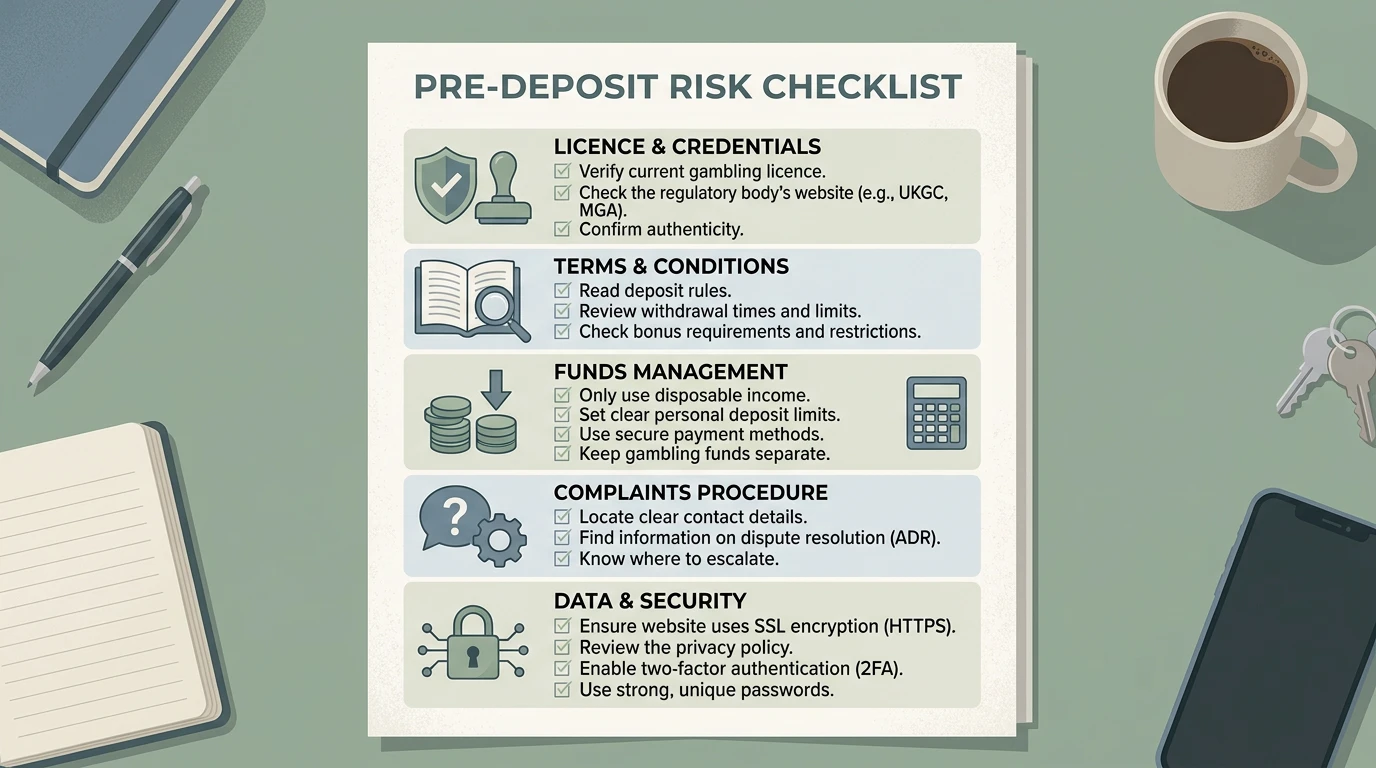
The ranking above is not a summary of public sentiment. It is a filter based on six specific criteria applied to a longer initial list of around forty sites. The criteria matter more than the scores, because the criteria are what a UK player should actually check before depositing.
Licence verification is the first and non-negotiable filter. The licence number on the site’s footer must resolve to an active entry on the issuing regulator’s public register. For post-LOK Curaçao licences that means the CGA portal at portal.gamingcontrolcuracao.org. For MGA it means the MGA’s own public register. For Anjouan it means the Anjouan Gaming Board register — and it means separately verifying that Anjouan does actually authorise UK-facing operation for that specific licensee, which is the point most affiliate reviews skip.
Payment testing is the second filter. Every site in the main ranking has had a small test deposit, small test cashout and small bonus clearance run against its published terms, using at least two payment methods. Withdrawal windows are recorded as median observed rather than as advertised. Sites that failed a small test cashout on the first attempt without a documentable reason did not make the ranking. Sites that passed but with delays outside published windows did make it, but with the delay noted in the individual review.
Bonus term legibility is the third. Wagering multipliers, contribution weightings, max-bet clauses during wagering, expiry windows, max-cashout caps on bonus winnings — all of these must be stated clearly on the offer’s own page rather than buried in a general terms document. Sites that made claiming a bonus a treasure hunt through cross-referenced legal pages did not make the list.
Support responsiveness is the fourth. Live chat response inside three minutes weekday evenings, email response inside 24 hours, actual product knowledge from the first-contact agent rather than a scripted deflection to a supervisor. This is a low bar and most sites clear it, but the ones that do not are usually revealing of broader operational corner-cutting.
Complaint history is the fifth. AskGamblers, Trustpilot verified reviews and public complaint records were reviewed for pattern rather than incident. A single complaint about a delayed withdrawal at any operator is noise; a pattern of complaints about the same specific mechanism (second-verification loops on large payouts, arbitrary bonus voiding, unclear source-of-funds requests) is signal. Sites with signal-level issues in the complaint history were excluded regardless of other criteria.
Responsible gambling tool availability is the sixth and, in the context of a non-GamStop guide, the most awkward. Every site in the ranking offers self-imposed deposit limits, session timers and self-exclusion tools on the operator side. None of them integrate with GamStop by definition. The presence of individual tools is a filter for a minimum standard of operator seriousness rather than a substitute for the national scheme.
The Risks You Sign Up For
The bulk of this article has covered the case for non-GamStop casinos as a legitimate offshore option for non-excluded adults. It has done so honestly. It is worth being equally honest about what you are not signing up for when you play at these sites.
You are not covered by the UK Gambling Commission’s licensee conduct requirements. That covers a longer list than most players realise: no LCCP-standard responsible-gambling monitoring, no LCCP-standard advertising restrictions, no LCCP-standard rules around vulnerability identification. What that translates to in practice is that the operator has no legal duty to intervene if your play pattern shows warning signs. That responsibility is entirely yours. If you are not confident it is yours, this is not the category for you.
You are not covered by the Financial Ombudsman Service or the proposed UK Gambling Ombudsman. The offshore ADR channels that exist under Curaçao’s LOK and under MGA are real but toothless compared to what a UK ombudsman would be. The specific problem is what parliament’s own IBAS submission called “ADR shopping” — operators can choose their dispute-resolution provider and change providers if they dislike the outcomes. That is not a hypothetical problem; it is a documented one. In practice, the UK-facing offshore ADR route resolves a smaller percentage of player-favouring disputes than the UKGC ADR route does.
You are not covered by the Consumer Rights Act in the same way. A gambling contract at a UKGC-licensed operator is a UK contract; a gambling contract at an offshore operator is a contract under the laws of the licensing jurisdiction. Enforcing it in a UK court is legally possible but practically expensive. Small-claims-court gambling disputes against Curaçao-based operators are not common because the cost of pursuit almost always exceeds the value of the claim.
You may lose credit-card chargeback protection. Card networks have discretion over which merchant disputes they process, and gambling-related chargebacks against offshore operators are increasingly deprioritised. This is not universal, but it is a trend. Do not treat the chargeback route as a reliable safety net.
Your UK bank may block deposits at any time. This has been the fastest-growing source of friction at non-GamStop operators in 2026. A deposit that worked yesterday may fail today with a merchant-category-code decline. The operator cannot fix this; it is a bank-side decision. Crypto avoids it. Cards may or may not, depending on your bank.
Responsible Play, Non-Negotiable
If you registered with GamStop, this article is not a route back to gambling. It is a survey of a category that exists parallel to the scheme, not a workaround for it. The reasons people register with GamStop are the reasons the scheme exists, and the offshore route is precisely the route that undermines those reasons. There is no way to write around that.
For non-excluded adults using non-GamStop casinos as informed leisure spend, the responsible-gambling toolkit still applies. Set deposit limits before you play, not after you lose. Use the session timer if the operator offers one. Do not chase losses across sessions, and do not raise stakes to recover a previous session’s losses; that is the mechanism that turns gambling from a spend into a problem. If you spot warning signs — playing longer than intended, hiding sessions from a partner, borrowing to gamble — treat them as the alarm they are.
Support resources: GamCare’s National Gambling Helpline runs 24/7 on 0808 8020 133 (free to call). BeGambleAware is at begambleaware.org. The NHS National Problem Gambling Clinic offers assessment and treatment for gambling harm. Talking to any of them costs nothing and commits you to nothing. Playing at a non-GamStop casino while worried about your own pattern is not a decision worth defending.
Are trusted casinos not on GamStop legal for UK players?
Playing at an offshore casino is not illegal for a UK adult. The Gambling Act 2005 regulates operators licensed to offer services in Great Britain, not the individual players who use them. What changes is the consumer-protection framework: an offshore licence carries no UKGC oversight, no UK ADR route and no Financial Ombudsman coverage. Legal to use; different in what it protects.
What licence should a trusted non-GamStop casino have?
The strongest is an MGA licence, followed by Gibraltar, followed by a post-LOK Curaçao licence issued after December 2024 and carrying an OGL/2024/ prefix. Anjouan appears widely in the tier but explicitly excludes the UK from its authorised territories, which weakens its practical value for British players. Verify any licence number on the issuing regulator’s own public register before you deposit.
What is the fastest-paying trusted non-GamStop casino in 2026?
Crypto withdrawals at Freshbet, MyStake and Cosmobet consistently clear in under an hour on verified accounts. Card and e-wallet withdrawals at GoldenBet and BetPortal typically clear inside 24 hours. First-cashout timing at any operator is longer than the median because of KYC. Verified windows apply to accounts that have already completed identity verification once.
Can I use PayPal at trusted non-GamStop casinos?
Generally no. PayPal restricts its gambling integration to UKGC-licensed operators specifically, so no post-2020 non-GamStop casino accepts PayPal directly. Skrill and Neteller are the closest e-wallet equivalents at the offshore tier, with MiFinity as a growing third option. If PayPal support is essential to you, this category is not the right fit and you should stay with UKGC-licensed operators.
Are trusted crypto casinos safer or riskier than card-based non-GamStop sites?
Neither, on the licensing dimension. A crypto-first site and a card-based site under the same offshore regulator are equally covered or uncovered on regulatory grounds. Crypto is safer on the bank-blocking dimension because the payment does not touch your UK bank at all. Crypto is riskier on the price-volatility dimension because your winnings are denominated in a fluctuating asset. Use stablecoins if you want the crypto payment speed without the price exposure.
Do trusted non-GamStop casinos still verify identity?
Yes, at some point in the account cycle. The “no-KYC” marketing common in the crypto-first corner of the tier means KYC is deferred, not skipped. AML thresholds under offshore licensing regimes require identity verification at defined transaction volumes — typically the equivalent of €2,000 in cumulative activity, though the specific trigger varies by regulator. Prepare ID and proof of address before your first significant withdrawal.
What should I do if a trusted non-GamStop casino refuses to pay out?
Start with the operator’s own escalation process — a written complaint to the compliance email, keeping records of everything. If that fails, escalate to the licensing regulator’s ADR channel. Under post-LOK Curaçao that is the CGA’s own dispute framework; under MGA it is the Maltese Player Support unit. Payment provider chargeback is a route of last resort with mixed success. UK court action is available but rarely economic for typical disputed amounts.
Where This Leaves You
The trusted non-GamStop casino category in 2026 is a real category with real operators and real trade-offs. It exists because UKGC regulation of licensed casinos has tightened faster than the pace of consumer behaviour change, and it exists specifically as an option for adult players who accept the reduced consumer protections in exchange for the product features that domestic sites can no longer offer. That is a legitimate exchange for some players and a bad idea for others.
The eight operators ranked above are the picks most likely to still be paying withdrawals in six months and to still hold verifiable licences a year from now. That is a lower bar than “recommended”, and it is deliberately a lower bar. The category rewards scepticism. Verify the licence, test the payout with a small first cashout, read the wagering before you claim any bonus, and treat the marketing language with the eye-rolling it earns. Every claim of “exclusive VIP status” is a retention pitch; every “no-wagering” banner deserves the specific terms check; every welcome bonus number is the marketing team’s most flattering possible framing of what you are actually being offered.
Nothing on any casino’s homepage is designed for your benefit — that includes the “responsible gambling” widget in the footer, which exists because it is a regulatory or brand-protection requirement, not because the operator is worried about you. That does not make the tools useless. It means the responsibility for using them stays with you, and the reason for using them stays with you, and the consequences of not using them stay with you too. Play accordingly.
Created by the "Casino not on Gamstop" editorial team.